It was odd to get several days into Fringe and realize that I hadn’t yet spent time viewing traditional multiple-actor plays, except for Matt & Ben. I missed them, while still enjoying performance art, improv, and solo shows. But now I’ve seen a few more dramas and comedies.
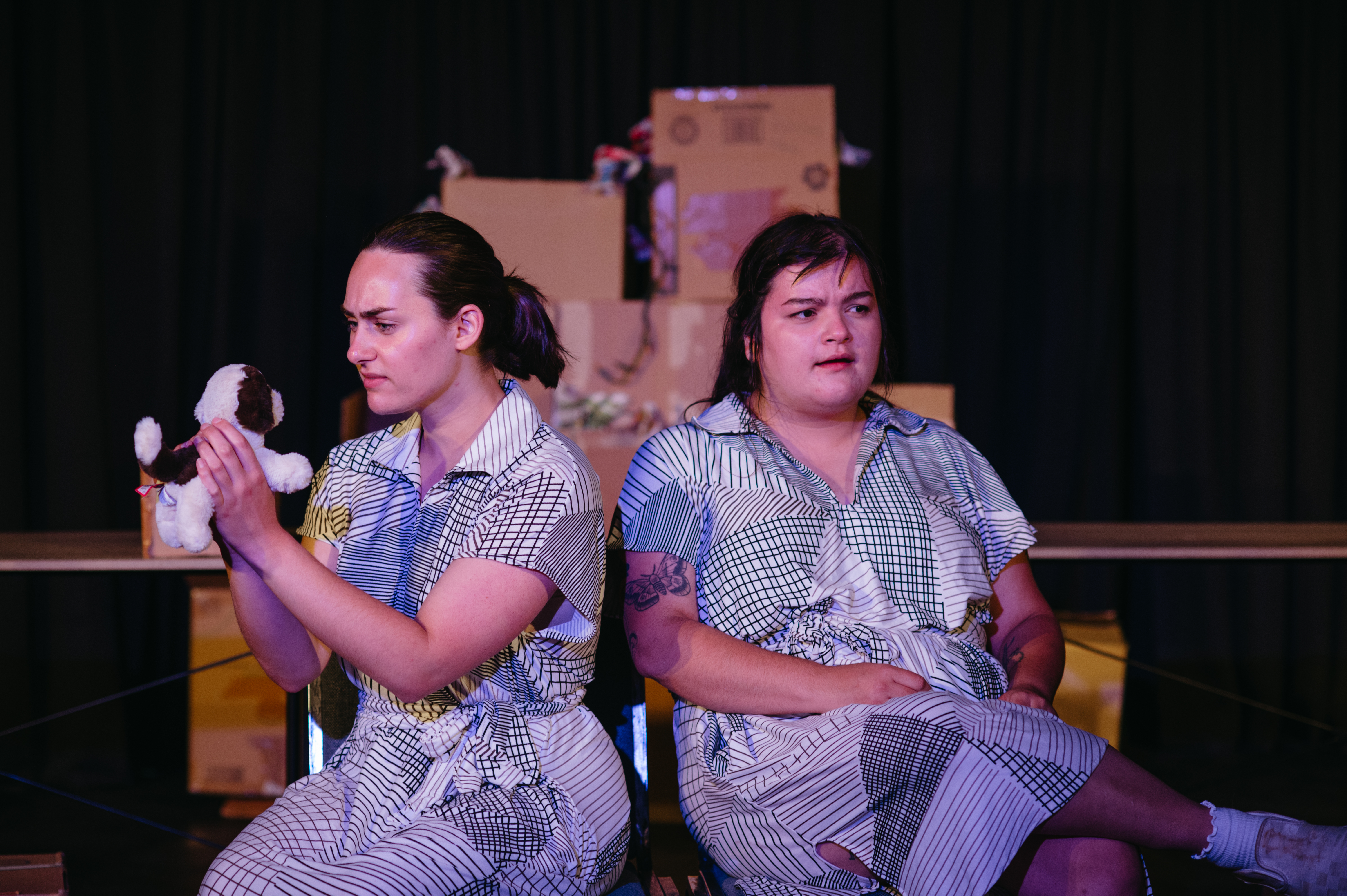
Fetch, by Cat Walsh, was originally a 2018 Fringe production with the playwright and Lora Brovold on stage. I didn’t see that one, The 2026 production, directed by Steven Sobolewski, stars Shyanne Duquette and Abby Krushel. The two actors burst onto the small stage of Acacia Hall in near-identical dresses, carrying identical suitcases, speaking over each other and with each other to each insist “I am Hannah Morgan.” And each begins to narrate the story of her life – one tragic, one less so – but with suspiciously similar details. Each recounts the events of a big family vacation to an amusement park – as the youngest of a big family, six-year-old Hannah resents the vacations she missed out on being born last, and the way that siblings moving out to university and on to extracurricular activities and jobs signify the end of the family-adventures era. Krushel’s Hannah recounts her grievances with the age appropriate self-centredness of a loved youngest child, while Duquette’s character drops hints of bitterness and bereavement. Were there two families in the same reality whose lives had intersected that week? Were these two Hannahs embodying different multiverses, different outcomes? The Hannahs allude to the Schrodinger’s cat paradox – a cat in a box might be either alive or dead, until the box is opened. The weirdness ratcheted up along with the excruciating tension, as horror approached. I was reminded of Walsh’s 2015 Sterling-Award-nominated script The Laws of Thermodynamics . One of my favourite bits was when Duquette’s character is reminding the audience of the required ritual of speaking to a grieving person, the I’m sorry and Thank you shifting into taking the exchange as a given. It’s very well done.
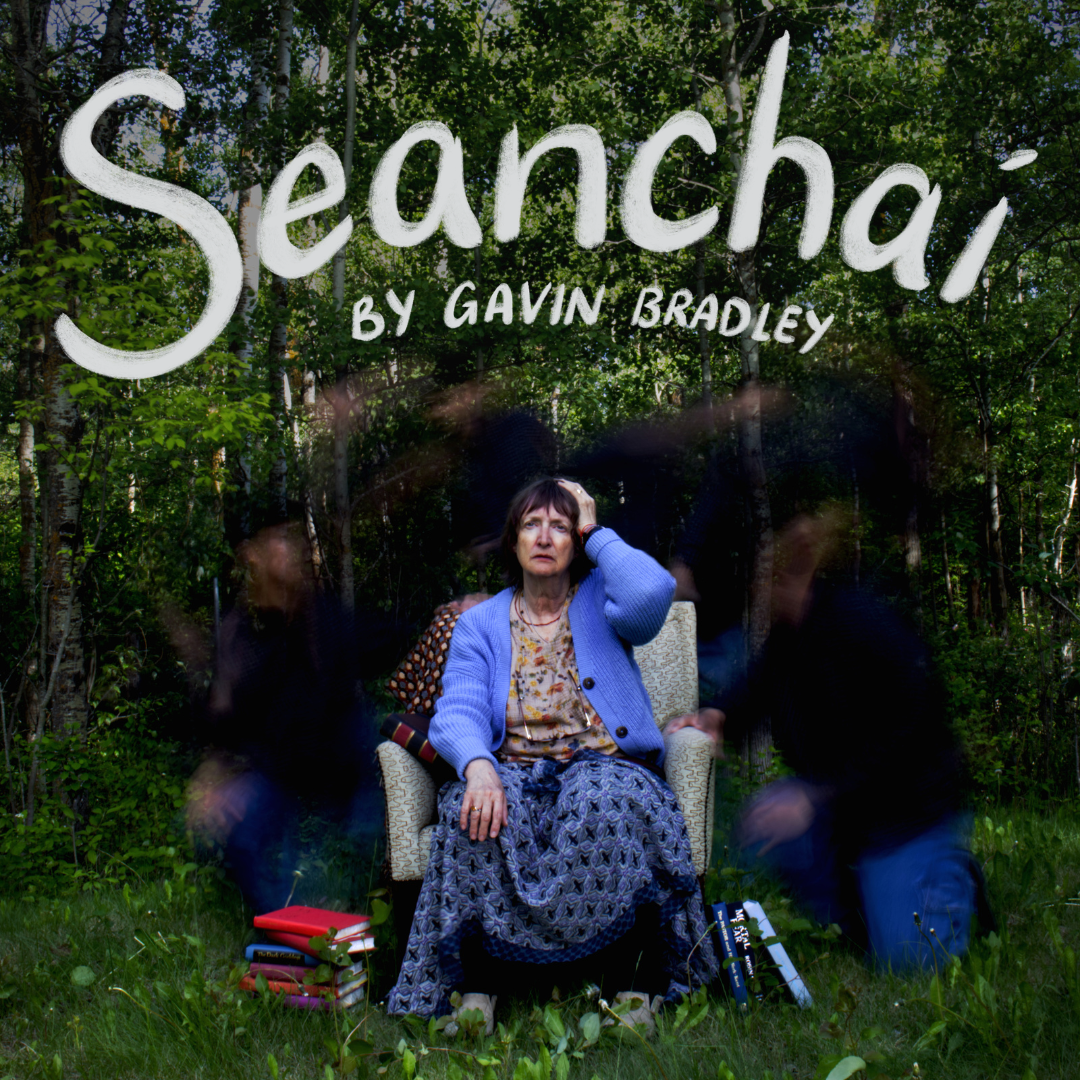
Seanchaí, by young local playwright Gavin Bradley, isn’t marked in the program as New Work – I guess because it had a successful entry at StageStruck! and the provincial one-acts festival last year. But this is its first longer run, and it’s being well received by Varscona Theatre audiences. Susan Sneath, an Edmonton Fringe artist since the festival’s first summer, plays a retired seanchaí (storyteller and oral historian in the Irish tradition), and Mark Guerrero a young person who’s been retelling the traditional stories for TikTok. The grudging respect and growing affection between the two unfold as they tell the stories to each other, correcting and challenging. Its poignant and relatable and also affectionately funny. Knowing bits of Irish language means getting to laugh at a few lines first, but definitely isn’t required to follow the story. Knowing the folklore (Cú Chulainn, Children of Lir, Fionn mac Cumhaill and the Salmon of Knowledge) is also not necessary, as both storytellers provide compelling versions. Amanda Goldberg (recent Sterling Award winner for directing Jessy Ardern’s Cyrano) directed, bringing an understated delicacy and allowing the characters to show their quirks without being stereotypes.
Another small story of a gentle interaction between two isolated characters is Being Norwegian, David Greig’s script directed by Amy De Felice at the Holy Trinity Anglican basement space. The 45-minute play is set in Sean’s (Cody Porter) barely-unpacked apartment, late at night, as he brings home new acquaintance Lisa (Clarice Eckford). Both characters have Scottish accents, but Lisa explains that her name is short for Liselotte and she’s Norwegian. And they’re both awkward. Likeably awkward. The audience is sighing in sympathy as Sean tries to find a bottle of wine and can’t find glasses. His visitor assures him that mugs are better anyway, takes a sip, and manages to communicate to the audience that the wine is terrible without letting Sean see that. Porter and Eckford are both very good at this kind of nuanced portrayal of ordinary people – I’m remembering Eckford as caregiver daughter in The Gravitational Pull of Bernice Trimble and Porter in Angry Alan, Betrayal, and others.
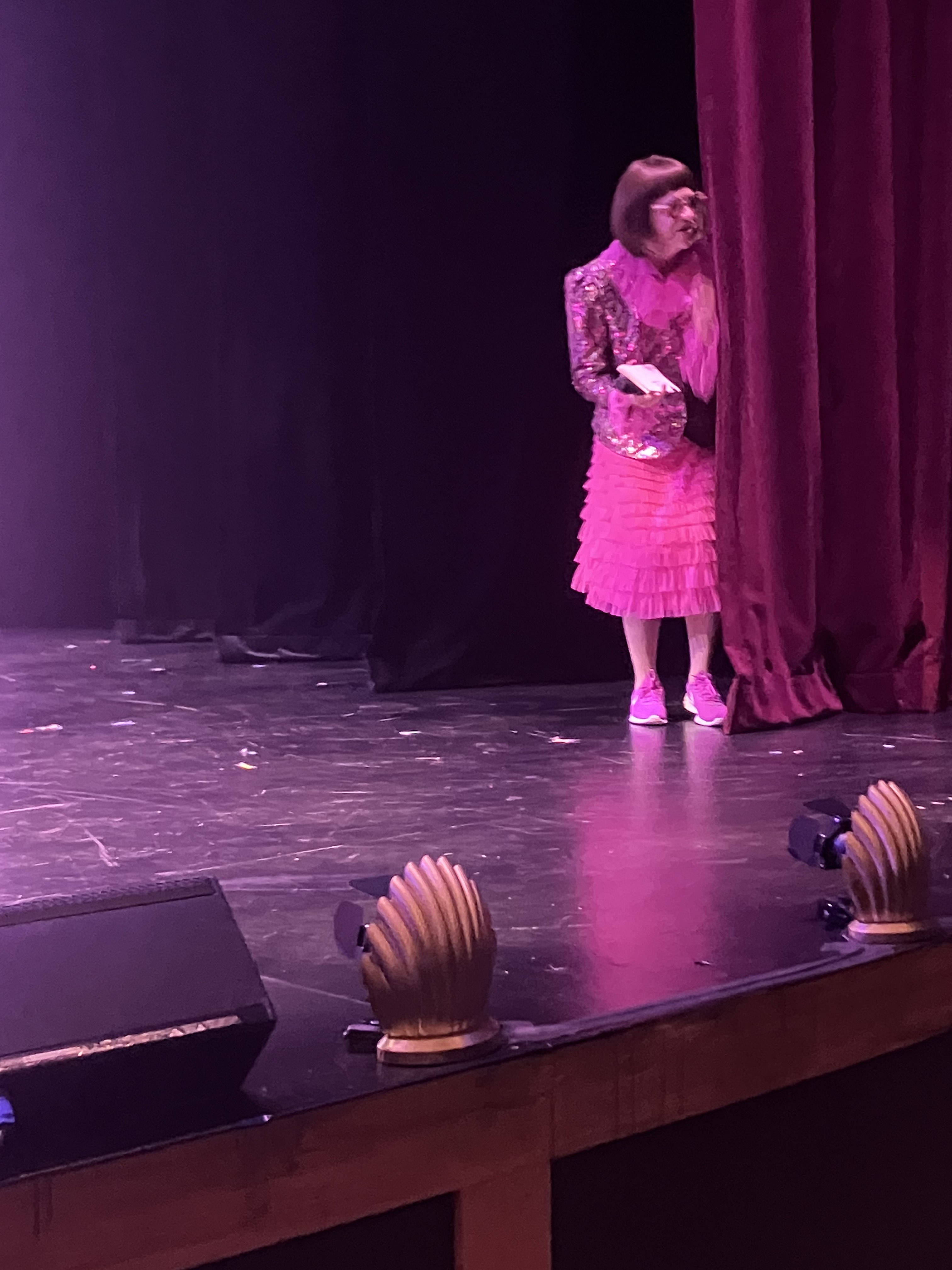
Queens of Romance, by Trevor Schmidt, is sillier than any of the above, and an audience favourite. Three romance writers are on a panel at a convention – the usual moderator is unavailable due to some whispered family scandal, so fan Missy (Schmidt) gamely takes the podium and the clutch of cue cards and tries to carry on. The panelists embody the range of romance-writing styles. Jason Hardwick portrays the Barbara Cartland-type Dame Nausea with smugness and pathos and dignity (but not all at once!) wearing the most over-jewelled caftan I’ve ever seen. Michelle Todd’s Janet writes about contemporary celebrity infidelities with luxurious descriptions – there are probably throbbing members in her stories. And the youngest of the writers, Karen (pronounced Karin), (Jake Tkaczyk), writes erotic suspense, with unapologetic kink and brutal imagery. Each of the writers is critical of the others’ choices, naming some of the problematic issues with women’s agency, racism, classism, transactional sex, and women feeling shame about their desires – all while conducting snappy repartee with each other and the ill-equipped moderator (and possibly with audience members). While I was admiring the pre-set before the show started, I was amused to see Schmidt’s anxious moderator character peeking out from the side curtains looking worried.