Tag Archives: trevor schmidt

“it’s not practice, it’s REHEARSAL”

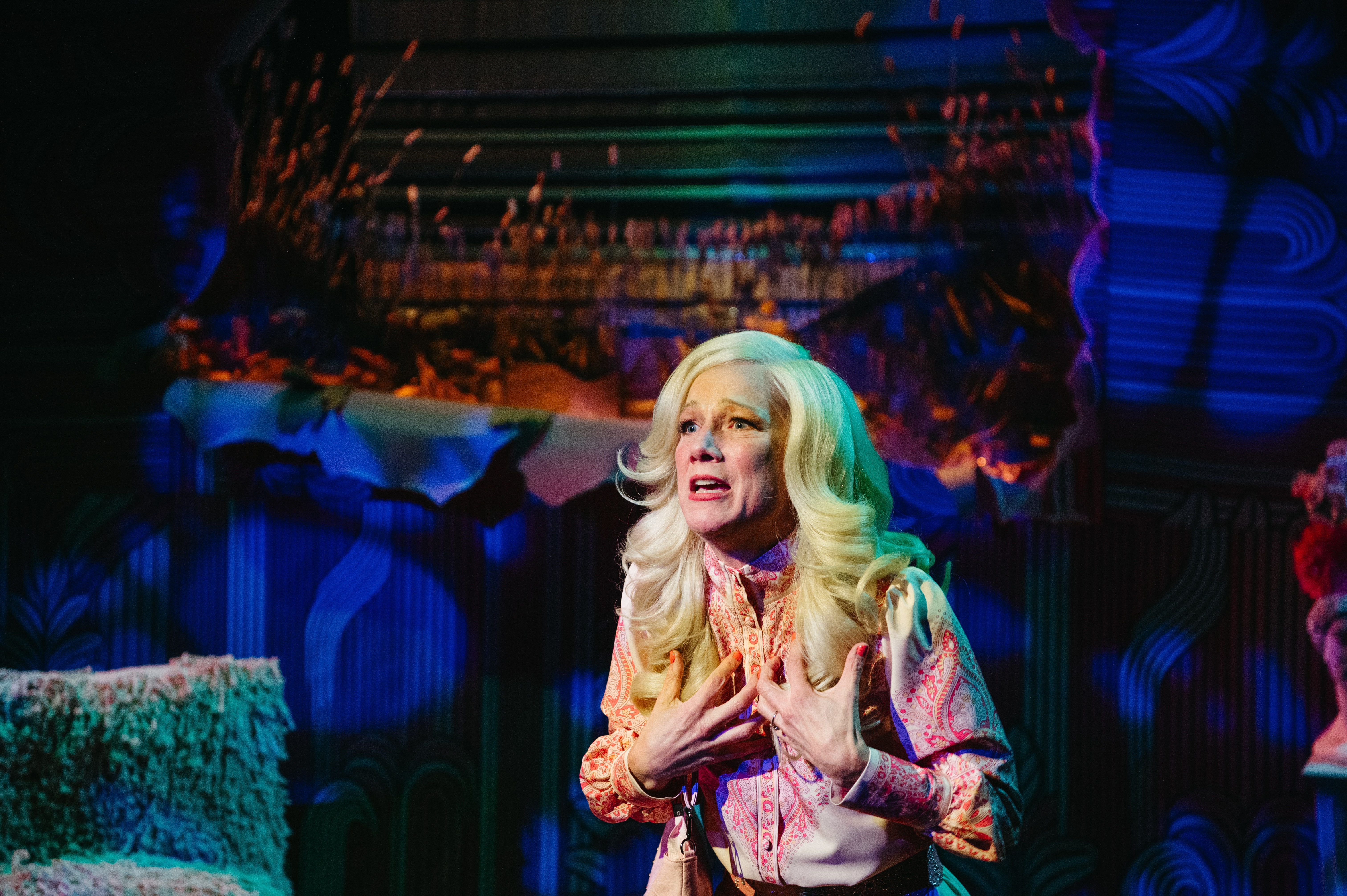
There’s a new Trevor Schmidt play, How Patty & Joanne Won High Gold at the Grand Christmas Cup Winter Dance Competition. It’s opening simultaneously at Northern Light Theatre in Edmonton, directed by Schmidt, and at Lunchbox Theatre in Calgary, directed by Bronwyn Steinberg.

I saw the Northern Light production. And it left me a little teary, in a contented, some-things-right-in-the-world way.

Jenny McKillop and Kendra Connor play Patty and Joanne, two students in an Adult Beginner Tap class at the Free Body Dance Station. You will probably recognize both performers from amusing shows with Teatro Live! or Fringe or other local companies, but they’re both new to Northern Light. And they have really great chemistry together – both characters mean well, but they start off awkward, not understanding each other and not comfortable together.

As the play starts, they’ve just gotten the message that their dance teacher, Miss Amber, won’t be back to keep teaching them. And the class, which started out full, has dwindled until – are they the only ones who still want to dance? they aren’t sure. Joanne and Patty take turns narrating the story to the audience and interacting with each other in the studio. Rae McCallum’s lighting design makes it clear to us when there’s a shift. The simple set design (Schmidt) makes clever use of the dance mirrors usually hidden behind curtains in the Fringe Studio Theatre.

Both women are middle-aged and have comfortable-enough secure lives, but we see that each of them is lonely and left out, wanting something more, something just for herself. Patty describes coming home from class to see her husband (Peter) and five children (Parker, Patrick, Petra, Poppy, and Emma) decorating cookies together in the kitchen, and they all run to greet her as she drops her dance bag by the kitchen door – and then immediately disperse to other parts of the house leaving her to do all the dishes. I found that bit one of the most poignant things Schmidt has ever written. And the measurement-for-costumes business was hilarious and relatable.

Joanne talks about how she came to love music and dance and especially musical theatre and movie musicals, with memories of being taken on a special movie outing with her parents, wearing a dark red velvet dress with white lace just like her mother’s. “She was beautiful. And on that day, I was a little bit beautiful.” Throughout the play, Joanne bombards Patty with musical theatre history facts and cultural tidbits. She corrects Patty, a sports parent, saying that for dance “it’s not practice, it’s rehearsal”. Their rehearsal outfits are consistent with their different backgrounds/expectations (costumes by Logan Stefura). Joanne is wearing a ballet-pink leotard and tights under a wrap skirt and cut-off CATS t-shirt, while Patty’s outfit includes cutoff grey sweatpants and a football jersey.

In the first scene they rehearse the tap routine that Miss Amber had been teaching them, to “All the Single Ladies”. (Apparently the women in the class would have been dressed as reindeer, with the man as Santa.) The moves are familiar to anyone who’s watched beginner tap classes. They aren’t very good. They keep running that routine periodically as the story progresses, and they get more in sync. Then they change to a piece better suited to entering “musical theatre duet” instead of the “adult group tap” competition class – Mariah Carey’s “All I Want for Christmas is You”. Their performance gradually improves, and their homemade costumes are both credible and fairytale-delightful. Jason Hardwick’s choreography works well to make the easy moves look hard and then have the dancers gradually master them. The soundscape (Lindsay Walker) evokes tap-dance performances and pop-music fun, right from the pre-show selections.

Like many of Trevor Schmidt’s scripts, I started out amused and then became engaged with the likeable but very distinct characters and their situation, realizing afterwards in conversation with my theatregoing companions that there were also some profound messages in the narrative. About the difficulty and awkwardness and necessity of making new friends in mid-life. About wanting “something just for me.” About how anything worth doing is worth doing badly. All of which are good reminders, especially before Christmas.

Running time is about an hour, with no intermission – which is just right for this quiet delightful two-hander.

Tickets to How Patty and Joanne Won High Gold at the Grand Christmas Cup Winter Dance Competition are available here. Performances run until Saturday December 13th. If you’re in Calgary, or if you loved this script so much that you want to road trip, the Lunchbox Theatre production runs at the Vertigo Theatre in Calgary until December 18th.
Northern Light’s The Pink Unicorn: hopeful and loving

Patricia Zentilli as Trisha Lee in The Pink Unicorn. Images Brianne Jang BB Photographic. Set and costume Trevor Schmidt, lighting Larissa Poho.

The first production in Northern Light Theatre’s 50th-anniversary season is The Pink Unicorn, by Elise Forier Edie, directed and designed by Trevor Schmidt. I meant to tell you about it last week, but for some reason my blog host wasn’t letting me post pictures. So I waited, since I love the promo photos of Trisha telling her story.

And it’s so good! Patricia Zentilli plays small-town Texas mom Trisha Lee. Trisha’s been raising her only child Jolene alone since her husband Earl died when Jolene was six. Various details show that she’s always been proud of her daughter and supported her in being her unique creative self. So when Jolene tells her mom that she’s going to start high school as an agender and pansexual person, named Jo, Trisha responds as well as she can manage – helping to shop for a leather jacket, and looking up the unfamiliar terms on the internet at work. She worries a bit about whether the other kids will mistreat Jo, but reassures herself and the audience that Jo looks “real cute” in her buzzed hair and black boots. By this point I realize that it’s not just me – that the whole audience is clearly on Trisha’s side here. We might feel superior from our 2025 perspective, already knowing the vocabulary – but Trisha Lee is so easy to relate to, a loving parent trying to support and protect her kid, who’s living a life Trisha doesn’t understand.

You might remember that Northern Light produced this solo play in 2015, with Louise Lambert performing, and with Trevor Schmidt directing and designing. I think the current production brings us a more nuanced portrayal of Trisha. I was struck by her bravery, in the way she did uncomfortable things because she needed to – from her history of getting a job and carrying on as a single parent after her husband died, to her steps into activism on Jo’s behalf.

Trisha also tells the audience parts of the story that don’t reflect well on her, acknowledging that some of the thoughts are things you aren’t supposed to say. But the comments she makes without apologizing help to remind the audience that she’s still part of that particular culture, where “Latino, Hispanic, and Chicano” are all still used, and in the inner monologue we’re privy to, she always refers to Jo as “she”, not as Jo’s requested pronoun of “they”. That particular point reminded me that maybe I’m making judgements based on superficialities too. Trisha is doing so much to support her daughter and the rest of the unofficial GSA, why do I even notice the pronouns detail?

Patricia Zentilli as Trisha Lee in The Pink Unicorn. Images Brianne Jang BB Photographic. Set and costume Trevor Schmidt, lighting Larissa Poho.

The set design (Schmidt) creates the sense of a feminine living-room – even a jug of pink lemonade on the coffee table – in front of a fascinating background with dainty pink wallpaper torn open to reveal a sculptured rural landscape. Lighting (Larissa Poho) and sound (Darrin Hagen) enhance the shifts in storytelling tone and location, through a church service, a downmarket bar, and a protest in the rain. Trisha’s outfit includes boots and a silver-medallions belt over a pink patterned dress and large hair, but it feels contextual rather than caricaturistic (I’m doing a rewatch of the small-town-Texas TV show Friday Night Lights, and she’d fit in there if she wanted to).

Also – parts of it are hilarious! Zentilli is great at delivering funny lines that the character doesn’t see as funny, or doesn’t stop to enjoy. This is no surprise to anyone who’s seen her in various big-stage musicals at the Citadel or the Mayfield,

The Pink Unicorn is both provocative and hopeful. In the author interview in the show program, Forier Edie says that if she were writing it today, she might write a “scarier” version. But I loved the reminder that people’s minds can be changed, one at a time, by really listening to the people they care about. And I appreciated the call-to-action at the end, where Trisha points out to us that doing the hard thing isn’t just for people who are already good at it. I know there are lots of Jos around here, and lots of Elijah Breakenridges. And I know that not all of them have a Trisha in their corner. But Trisha’s story shows that you don’t have to be an experienced advocate to start doing the right thing for someone you care about – just do it.

The Pink Unicorn is playing at the ATB Arts Barns Studio Theatre until October 11th. Tickets are here.

The 50th season of Northern Light!

Northern Light Theatre announces their 50th-anniversary season!

Next year will be the 50th season of Northern Light Theatre, an independent company whose mandate includes bringing challenging, thought-provoking, unfamiliar, and entertaining work to Edmonton audiences, with particular attention to stories of women. Artistic Director Trevor Schmidt has a particular gift for play selection, so that a Northern Light season typically includes at least one playwright I’d never heard of, but whose work captivates me and might be relatable or disturbing or both. Schmidt is also a playwright himself, with ventures into the poignant, the macabre, and the screamingly funny.

Last year’s NLT season was themed “Making a Monster”. Schmidt’s own Monstress started the season with a disturbing gothic Frankenstein-esque tale that left me thinking I wasn’t sure who the monster was. Angry Alan, by Penelope Skinner, starred Cody Porter as an ordinary guy who gets sucked in by “men’s-rights” rhetoric, with horrible consequences. And Philip Ridley’s Radiant Vermin showed a different kind of monstrousness, but was hilarious at the same time. It was one of the most thematically-effective seasons I’ve ever seen.

This coming year is called “The F Word”, as a play on the age of fifty being unspeakable. And the three plays each have some call-back to aspects of Northern Light’s history. The first one is a remount of the award winning The Pink Unicorn, by Elise Forier Edie, which was an award-winner in the 2014-2015 season. Trevor Schmidt told me that this production will use an updated version of the script, which is shorter and more cohesive. Patricia Zentilli will play Trisha, and Schmidt promises an all-new design, with a twinkle in his eye. If you’re not familiar with The Pink Unicorn, it’s the solo narrative of Trisha, a small-town Texas woman whose daughter begins to identify as agender, genderqueer and pansexual. Trisha loves her daughter, but struggles with her community’s intolerance, in a fight she didn’t choose. In 2015, I thought it was topical and ahead of its time — in 2025, I imagine I will find it even more topical, and definitely not dated!

Before Christmas is another Trevor Schmidt original, How Patty and Joanne Won High Gold At The Grand Christmas Cup Winter Dance Competition. The excerpts read at the season-launch included Jenny McKillop as a frazzled mum looking for an activity of her own, and Leona Brausen reading as another middle-aged-tap-dancer character. It seems like it will be very funny, but also an effective reminder of community and of loneliness.

The exploration of loneliness will come to the fore in the last play of the season, Franz Xaver Kroetz’s Request Programme. Instead of presenting an excerpt from this play, the teaser given at the season-launch was a performance by singer-songwriter-guitarist Cayley Thomas (a U of A BFA Acting grad), a wistful and moving song about missing her late brother. Schmidt explained that for each performance of this play, one actor from NLT’s long roster of talented female-presenting performers will perform a character’s solitary life routine without dialogue, while a soundtrack of a radio “request programme” plays in the background. The music on the request programmme will all be from local female artists, including Cayley Thomas. Some of the actors have already been identified – Linda Grass, Holly Turner, Nadien Chu, Michelle Todd, Pat Darbasie, Sylvia Wong, Davina Stewart, Kristin Johnston, Cheryl Jameson, Melissa Thingelstad – and with a few more still to be confirmed.

Early in 2026, the NLT Board will also be hosting some kind of gala 50th-anniversary celebration, details to follow. But the F-Word season seems commemorative and celebratory enough in itself. VIP season subscriptions are currently available here at an early-bird price until July 2nd.

Radiant Vermin, hilarious and uncomfortable

Rain Matkin and Eli Yaschuk as Jill and Ollie, and Holly Turner as Miss Dee, in Radiant Vermin. Photo by Brianne Jang, BB Collective Photography.

Northern Light Theatre’s theme for their 2024-2025 season was Making a Monster. The first two plays were Trevor Schmidt’s Monstress (a gothic horror in which a Frankenstein-like scientist attempts to reanimate a dead girl but gradually appears to be more monstrous herself) and Penelope Skinner’s Angry Alan, a disturbingly-realistic portrayal of a lonely man drawn into the “men’s rights” misogynistic culture with horrifying consequences.

I was apprehensive but intrigued, to find out how the third play in the season, Philip Ridley’s Radiant Vermin, would fit into this theme. I had some guesses, but they were all wrong. And I loved being surprised. What surprised me most was that it was funny. Very funny.

An exceedingly wholesome-looking young couple, Jill and Ollie (Rain Matkin and Eli Yaschuk), address the audience with their baby, to explain about how they got their dream home and what happened there. When Jill was pregnant, they were living in a dingy flat in a crime-ridden neighbourhood, dreaming of better things for themselves and their little one. Until they get a mysterious letter and an even more mysterious visitor, Miss Dee (Holly Turner), who tells them they’ve been selected by a government department to get a free house. It’s a fixer-upper, but by renovating it they’ll start turning things around for the whole neighbourhood, and everyone will benefit. They see the house and ask about details, and a mythologically-long contract tumbles out of Miss Dee’s handbag. Everything about this screams BAD IDEA to me, from the twinkle in Miss Dee’s eye to the long golden scroll of clauses on the contract, but as soon as they sign, movers are dispatched to their old home and they move in, even before the electricity or hot water are working.

Ollie starts out confident that he can DIY the necessary renovations, but heavily-pregnant Jill is impatient. They’re both unsettled by living in an un-gentrified area. If they can see campfires of homeless people from their bare windows, can the homeless people see their vulnerable candles? Jill explains to us that she has experience of helping her mother provide charity to homeless people – that she and Ollie are good people. But they are still fearful of being targets in their good fortune. Her othering language is a little disturbing, but very familiar. But when an accident happens to a vagrant on their property, they benefit in an unexpected way. And they begin to justify it – their gain helps the neighbourhood, and nobody who mattered was hurt. By this time the characters are fully drawn – Jill’s earnestness and obliviousness, Ollie’s awkwardness and willingness to please his wife – and I felt almost complicit as they wonder about what else they could benefit from. The script builds this complicity in some direct address to the audience on benign topics, such as inviting input on whether to renovate the bathroom or the garage first.

Rain Matkin and Eli Yaschuk as Jill and Ollie, reading the letter offering them a house. Photo by Brianne Jang, BB Collective Photography.

Jill and Ollie’s house gradually gets renovated, according to the wish-list that Jill collects from magazines and catalogues. Upwardly-mobile neighbours gradually move in to the cul-de-sac, and we hear that ground’s been broken for the Never-Enough shopping mall nearby. Once all the houses are occupied, Jill and Ollie throw a garden party to mark their little son’s first birthday, with all the neighbours in attendance – and their facade of contentment and competence begins to fray, in a hilarious recounting.

I was thinking, this can’t end well. But I didn’t predict how!

The empty set (Schmidt) has a nearly-flat backdrop of a white-on-white house outline, with some harshly-shadowing sidelights. Its cleverness isn’t apparent until the show lighting (Larissa Poho) and projections (Matt Schuurman) begin to enhance it. I was fascinated about how the simple “porch” framing was used, along with shifts in light and soundscape (Chris Scott), to represent stepping from an upstairs bedroom into a staircase leading to potential danger.

The script of Radiant Vermin does have some important messages/themes, about envy and about buying in to materialistic wanting-more and about dehumanizing the have-nots, but the messages land with bouffon-esque discomfort at our own complicity. Schmidt’s production is perfectly cast. Holly Turner, most memorable as the eponymous Mary in The Testament of Mary, is hypnotically fascinating here, as the character Miss Dee needs to be, and Matkin and Yaschuk are well-matched, allowing some outrageous events to be natural character choices.

This was one of Northern Light Theatre’s most successful thematic season groupings in my memory, partly because the plays were so different. Each illuminated some facet of the question of how ordinary humans can do evil things. Each left me uncomfortable and wanting to discuss my experience with others. And each made me grateful for the community of theatregoers with whom I can share, both the roomful of audience members laughing and sighing and gasping in the moment, and the ongoing conversations like this.

Before today’s matinee, Trevor Schmidt is hosting a Director’s Circle at 1 pm. At these events, he typically discusses the motivation for choosing the play and some of the design challenges, without giving away anything about the ending. And on Thursday there’s a moderated talkback after the show – more opportunities to join in the conversation.

Trevor Schmidt and Holly Turner in a candid moment at the opening-night reception for Radiant Vermin.

Radiant Vermin continues at the Arts Barns Studio until May 3, with tickets here. Be disturbed and be delighted!

The world of Angry Alan

Cody Porter in Northern Light Theatre’s Angry Alan. Photo by Brianne Jang of BB Collective Photography.

The posters for Angry Alan, the new production at Northern Light Theatre, portray an angry man. The character on the poster seems to be mid-rant, gesturing towards an audience with his laptop open and his mouth open. So I expected that. But when the actor in this solo show, Cody Porter, first appears frozen at the dark vom entrance to the theatre, looking at the audience apprehensively, and then walks cautiously towards the stage as an unfamiliar space, I didn’t see anger. Even as he starts to tell his story, his distracted demeanour and circumlocutions convey that he’s telling a story he doesn’t want to tell.

Roger, currently a junior manager at a Safeway store, starts with a self-deprecating anecdote he knows his listeners will relate to – checking his phone before going for a run and getting sucked into hours of clicking links and watching videos. In one of those links, he finds a video “about history”, by a man whose seductive analysis of society reassures him that life has not been fair to him, because he is a man.

I was drawn in despite myself, to Trevor Schmidt’s production of Penelope Skinner’s 2018 script Angry Alan. I expected to be frightened for myself and others, and enraged, and frustrated. But this naive guy talking about how the messages he found online were new to him and how they gave him comfort – I kind of liked him.

Roger tells us he keeps reading, and keeps watching, and signs up for mailing lists. He notices things in his own life that fit the patterns he’s told about by “Angry Alan.” At work, he’s expected to suppress his own feelings and let customers (female customers, it seems), not only express their feelings but manipulate the employees with them. This fits what Alan’s group is saying – that society expects men to pay attention to women’s feelings but not their own. Once he’s watching for this pattern, he observes that a male bagger gets fired because a female customer cries about broken eggs. Maybe he could intervene, and protest?

He tells us he has a son he doesn’t talk to often, because of divorce and custody arrangements. And, parroting the arguments of Angry Alan and other men’s-rights activists, he extrapolates that this shows a system biased in favour of women and mothers, and that feminism has “gone too far”.

In both cases, I was gripped by the apparently-logical steps from the character’s real problems to erroneous and dangerous conclusions. I found myself wanting to make noises and gestures of disgust, and I was disturbed that some in the opening-night audience were laughing. It was outrageous, but it was not ridiculous. Maybe it was a laughter of shock and discomfort.

By the time Roger is ready to talk about his discoveries to anyone else in his life, he has gone far enough into the us-vs-them world that nobody can talk him back. Roger uses the metaphor of having a Red Pill Moment, calling back to the film The Matrix where choosing to take a red pill means choosing uncomfortable revelation. He sees any challenges or disagreements as more evidence that men are oppressed. He texts his son a link to Angry Alan, sure that it will help them connect. His son responds LOL, which Roger misinterprets.

The production makes good use of projections (Amelia Chan) in showing some of the online interactions that influence Roger’s choices. We see text-message screens, emails, some real video clips of people in that culture, and the website where Roger decides to sign up for a Men’s Rights conference and then is presented with a request to donate to the cause, slickly presenting it as an opportunity to be an “insider” in the movement.

Partway through, I realized that nobody was laughing any more. The narrative was incredibly unsettling, and the portrayal was effective. Roger is so full of hope, believing that being part of this movement will bring him happiness – and the audience can see so much wrong that he’s not noticing.

After the play, over delicious snacks of the opening night reception, we talked about how people who do not feel included and understood are vulnerable to recruitment by gangs, by cults, by populist political movements, by radical extremists of all kinds. And how the groups and their recruiters use those tools intentionally. I suddenly remembered the offstage “mob” behind the doxxing and harassment of Kristin Johnston’s character in Workshop West’s production of Mob last year. It was easy to see how that lonely and struggling young man, portrayed by Graham Mothersill, would have grasped at the chance to impress other men by doing something mean.

Cody Porter, as Roger, is enraged by video clips. Photo by Brianne Jang of BB Collective Photography.

This production is a nuanced and disturbing exploration of some societal trends that I mostly try not to think about. I guess I’d like things to be black-and-white too, but they are not. Trevor Schmidt, Cody Porter, and the rest of the team have done some brilliant work to make me understand this character, and other men like him. And maybe I need to understand them, in order to help build a world that is better for everyone. I’m glad I saw it and I’m not done thinking about it.

Angry Alan is playing at the Studio in the Fringe Arts Barns, until January 23rd. Tickets are available here.

Trevor Schmidt’s Monstress

Preset for Monstress

I’ve seen so much good performance in the last couple of weeks – it’s like Fringe, without the green onion cakes. I’m behind on writing it all up, and next I’m going to Pirates of Penzance.

I didn’t post about Monstress right away because it’s harder to describe than some of the other productions on local stages this month. Monstress, the first show in Northern Light Theatre’s season, left me unsettled. And I’m pretty sure it’s supposed to be unsettling. It’s a premiere written, directed, and with set and costume design by Trevor Schmidt. Lights are by Larissa Poho and sound by Dave Clarke.

Performers are Sydney Williams (The Doctor) and Julia van Dam (The Body). That gruesome and impersonal credit is consistent with what we see early on. The Doctor tells us that despite her expulsion from the school of dissection and medicine, she has been able to continue her work in understanding human life to the extent that she can bring it back after death. She is dressed and/or lit in a bottle-green colour, reminiscent of some earlier era (steampunk? Victorian? it’s not specific). At first, her monologue about whether she is actually a monster herself does not seem to apply literally – it feels atmospheric, like some type of poetic overstatement.

Then she explains that a Colonel sent her the body of his daughter Lydia Chartreuse, recently dead from a riding accident. Actor Van Dam lies immobile on a lab in the basement lab (like the eponymous Rocky of Rocky Horror, but really not). Lighting makes her skin and her bodysuit into some flat chill colour between alabaster and pale green. The Doctor then uses her knowledge and additional equipment funded by the Colonel in attempts to re-invigorate the body.

These attempts appear to be successful, in a way. The Body can move, but it/she seems to have lost adult understanding, so the Doctor must teach her, must, in a way, raise her like a child or train her like a pet. Van Dam’s slack-jawed clumsiness and naive questioning conveyed a childlike tabula rasa,

After the two of them move out of the city to rehab at the Colonel’s private country estate, Van Dam also plays the housekeeper, poised and veiled and apparently in possession of even more information than the Doctor. It seemed to me that the Body/Lydia had information about her death and her previous life, that the Doctor did not. As an audience member trying to piece together the backstory, I wanted the Doctor to ask the right questions – and she didn’t.

The situation reminded me a bit of the 2018 Northern Light production by Bryony Lavery, Origin of The Species, in which an anthropologist (Holly Turner) discovers a live prehistoric woman (Kristin Johnston) and tries to accustom her to modern life, and a bit of the NLT’s 2016 production of Wish (adapted from a Peter Goldsworthy novel by Humphrey Bower), in which a young man (Christopher Schultz) develops a relationship with a sign-language-communicating primate, Ainsley Hillyard. Many NLT productions make me ask questions about what it actually means to be human, and to be humane, by considering edge cases. Provocative and unsettling edge cases.

I began to think that the Doctor didn’t want to know more about Lydia’s past, or about what was likely to lie ahead for her. Since I could make some horrifying guesses about both, I flashed back to the Doctor’s top-of-show musings about whether she was the real monster. Because … maybe she was. Like the scientists of Jurassic Park, she was so preoccupied with whether she could, she didn’t stop to think if she should. Because she didn’t care. And by the time the play ended, my worries about Lydia were modern-day realistic horrors. My feelings about the Doctor were mixed up with far too many true stories about people who don’t have the best interests of vulnerable people at heart – are they actively evil or oblivious and negligent, and does intent even matter?

Monstress is playing at the Arts Barns Studio until November 23rd. Tickets are available here. The theme of their season is Making a Monster – and I am starting to see why.

Day Three – local artists, new stories

It’s hard to find a connecting theme for the four productions I saw today, except that they were all done by familiar local artists.

Dick Piston Hotel Detective in Prague-Nosis was, as the title suggested, a classic noir tale with a hardboiled detective narrator (Lucas Anders), an assortment of suspicious characters (Mélissa Masse, Sarah Gibson, Dan Fessenden, Dave MacKay), and an atmospheric setting cleverly suggested by description, lighting, and a few set pieces moved around to suggest different locations in the seedy Lakeview Hotel. The published script, by American playwright/television writer Jeff Goode, offers scope for over-the-top humorous character portrayals but seems to have the consistent intricate plotting of a classic noir detective story. Director John Anderson has gathered a cast of clever character actors and talented crew, familiar from Walterdale Theatre productions. ASM Adorra Sergios displays title cards before each scene, in a series of increasingly strange hats. Playing in the Sugar Swing Ballroom (main floor) space, venue .

Rob and Chris / Bobby & Tina is an adaptation of one of my favourite plays ever, Collin Doyle’s Let the Light of Day Through. The playwright adapted it to a 60-minute musical format, along with composer/music-director Matt Graham. The original 2013 production of the play, with Jesse Gervais and Lora Brovold, portrayed the awkward affection and determination of a couple who experience an awful tragedy and … not get over it, but go on. The play is partly recollective, but they act out the stories to tell them to the audience, and it is very funny except when it’s awful. Part of the power of the original experience, for me, was not knowing what they were avoiding telling, until they told it. When I heard that Kate Ryan of Plain Janes would be directing a musical adaptation for the Fringe, I was excited, but also apprehensive. What if it wasn’t as good as I remembered the play? What if the experience depended on not knowing the outcome? But it is very good. It landed differently for me because I was watching for clues, but it was still powerful. The couple (Bobby + Tina when they meet as teenagers, Rob and Chris later) are played by Garett Ross and Jenny McKillop. They do just as well showing the awkward disconnects of a new relationship and a long-term one as they do showing the way that the couple develops a shorthand of shared understandings – the scene of trying to have a role-play fantasy when each of them thinks the other wants something else was hilarious, and the ways they imitate each other’s parents to amuse each other show clearly how they’ve been allied against both sets of parents for years. Graham’s music is suitably poignant and funny and affectionate, as called for, and the simple Fringe-appropriate set design (Trent Crosby) worked. Matt Graham plays the piano live. Venue 11, Varscona Theatre.

Mass Debating was also a musical and also at the Varscona. Trevor Schmidt wrote it and cast frequent collaborators Jason Hardwick, Cheryl Jamieson, Kristin Johnston, Michelle Todd, and Jake Tkaczyk, along with himself, to play junior-high-school debate team competitors. The universality and familiarity of the junior-high-aged themes (an early song focuses on each character’s worries of “Can they tell by looking?” ) were portrayed in a setting of mid-1970s Catholic schools, so the injustices were more overt and seemingly unchangeable than a contemporary context. Although the audiences know that things will get better, the characters really don’t. This dramatic irony provides not just humour but poignant compassion. Many of the unfairnesses focus on the institutional sexism of the society and that Church, and the way that both the boys (played by Jameson, Johnston, and Todd) and the girls (played by Tkaczyk, Hardwick, and Schmidt) express them in their interactions and behaviour. The thoughtless racism of the time was also shown in the segment where Ralph Washington, the Black competitor (Michelle Todd) was required to debate the Against side, on a resolution that racial integration has hurt Catholic education. Unlike Schmidt’s recent successful contemporary story about junior high school girls, Robot Girls, this one does not tie up the plot threads with happy endings. And it shouldn’t. That left me thinking. The music was written by Mason Snelgrove, and the accompaniment is recorded. Some of the announcer’s voice-overs were hard for me to hear clearly – not quite the Charlie-Brown-teacher “wah-wah-wah” but probably funnier than I knew about.

The drag comedy troupe Guys in Disguise have a new comedy, written by Darrin Hagen and Trevor Schmidt, called Microwave Coven. It’s also set in the 1970s, in a suburb, and it starts off with three neighbourhood women in fabulous caftans (Darrin Hagen, Jake Tkaczyk, Trevor Schmidt) preparing for a visit from neighbourhood newcomer Jason Hardwick. Hardwick is adorable as naive newlywed Mary Rose, in crinoline and blonde flip. The premise of this story is less realistic than the troupe’s recent productions like Crack in the Mirror and Puck Bunnies, but the characters are just as much fun. It’s also at the Varscona.

Two actors portraying youth in goth clothing, one male one female.

Candy and the Beast

Jake Tkaczyk, as Kenny, and Jayce Mackenzie, as Candy, in Candy and the Beast. Photo Brianne Jang, BB Collective Photography.

One of my Facebook correspondents called Candy and the Beast “this weird little play”. And he’s not wrong.

Trevor Schmidt’s latest original script on stage at Northern Light Theatre is disturbing and kind of delightful, both. I was thinking that it’s not quite like any of his other work that I’ve seen, but it takes advantage of a lot of things the writer/director/designer is good at. He’s good at poignant; he’s good at macabre; he’s clever at creating designs that enhance the mood and message of a production. He’s very good at the humour and dramatic-irony of naive child narrators, as we saw in Shadow Theatre’s recent production of Schmidt’s Robot Girls, about junior high school students in a science club making sense of families and friendship and growing up.

Candy and the Beast demonstrates all these strengths, in a performance a little over an hour long. The audience enters the Arts Barns Studio space in the fog and gloom, to be seated on low risers along one of the long walls and wonder what the menacing lumps on poles are, upstage. One of my neighbours, opening night, said that the lights were gradually coming up as showtime approached – but they weren’t coming up very much.

The play starts with two characters staring out at the world together through Hallowe’en masks and layers of goth-teen armour: Candy Reese (Jayce Mackenzie) is the main narrator, observing her little town and protecting her younger brother Kenny (Jake Tkaczyk). Younger, but not smaller – she prods Kenny to explain that he has a condition known as central precocious puberty, meaning that his body’s grown up while he’s still a little kid. So they call him The Beast. He says he doesn’t mind. She says he does.

And the town has some issues – not just the classism against trailer-park residents like Candy and Kenny and their parents, and general mistreatment of outsiders and weirdos, but a pack of howling animals in the nearby woods, and a serial killer at large – a killer picking off young blonde women, especially ones the town doesn’t care about. The story and mood reminded me a bit of Twin Peaks.

The sibling relationship between Candy and Kenny was one of the most compelling things about this play. The little boy adopts his tough big sister’s fashions, beliefs, and interests – his big sister beats up his bullies, helps him get to sleep, and reassures him that he’s not too old to trick-or-treat. As an oldest sibling, I found her mix of impatience and kindness easy to connect with. Their parents sound benign, but aren’t significant in the story. The play also says some important things about outsiders in a community.

Other characters brought to life in various scenes include self-absorbed real-estate agent Donna Crass shopping at the ice cream stand where Candy works, Sheriff Sherry Lau (“the long arm of the Lau”) updating townspeople about the investigation and search, a grandmotherly librarian helping Kenny research werewolves, and others. Tkaczyk, a member of the Guys in Disguise theatre-drag troupe, embodies some of these characters with distinctive voices and mannerisms.

The production is enhanced by Schmidt’s set and costume choices, dim and harsh lighting from Alison Yanota, and sound design and original music by Dave Clarke. The menacing lumps seen pre-show turn out to be a row of creepy heads on pikes, with the wall behind showing some graffiti left on the wall of Candy and Kenny’s trailer.

The performance includes several songs by Kenny (Tkaczyk), representing his thoughts, fears, and imaginings. They vary from eerie foreshadowing to a melodic ballad with a few songs reminding me of David Bowie’s 1980s repertoire, with effective use of recorded guitar track and echoey microphone.

I won’t reveal the plot events or provide any explanations of the mysteries, but I found some satisfaction at the end in a shift in the relationship between Candy and Kenny, as they become more honest with each other and give each other more comfort. I don’t know what will happen to these characters next, but I think it’s going to be okay. (And if you don’t think so, don’t tell me, because I really like both of them!)

Candy and the Beast is continuing at the Arts Barns Studio Theatre until next Saturday night, April 20th. Run time is about 65 minutes. Tickets are available here and at the door. (Tuesday Apr 16 is 2-for-1).

Fringe 2023 Day 8

It’s Friday morning – there are two and a half more days of Fringe shows to come. It’s foggy and smoky right now, but it’s supposed to clear up later this afternoon and be sunny with a high of 26 or 27 degrees on the weekend.

Thursday’s schedule was assorted in style, but all very good.

Lesbihonest – Laura Piccinin from Toronto delivered a one-hour standup monologue about her various comings-out and partners, her personal experience of queerness and the background of changing vocabulary and identity labelling. I loved it – and not just the parts I identified with. One particular bit of it, about meeting a schoolchild who talked matter-of-factly about being a lesbian, brought me to tears. I was reminded a bit of Kimberly Dark’s Dykeopolis in, wow, that was 2013. Stage 5, Acacia Hall.

Lia and Dor – I am so glad I fitted this into my schedule. It was lovely. Cristina Tudor, playwright and perfomer, and director Keltie Brown Forsyth shaped this original work in the small Nordic Studio blackbox with a few props and costume elements, giving the flavour of a Romanian folktale. Tudor and the other performer Alex Forsyth played several characters – a contemporary young woman Lia and her Dor, a Romanian word which “means something like longing, or wanderlust or a soul-calling. It encompasses both melancholy and joy and hope. A feeling that drives you to take a new journey, fall in love, come back home. You know this feeling, we all do. ” but also her grandparents and great-aunt, a wolf, a serpent, etc. A bit of puppetry, a bandanna becoming a kerchief, some shifts of voice and physicality, and the transitions of time and character were easy to follow. I like stories where the mythology and the current reality intersect, with characters speaking in contemporary voice along with archetypes and fantasy. I have appreciated the work of Forsyth and Brown Forsyth since first seeing 7 Ways to Die: A Love Story in 2012, and Tudor’s work was a great fit for their company K.I.A. Productions, now Vancouver-based. I’m also looking forward to seeing David Johnston’s Let’s Talk About Your Death, directed by Alex Forsyth, later this weekend.

Lady Porn – This Whizgiggling Productions threehander was written by Trevor Schmidt, and stars the same three fascinating actors as the Destination Wedding and Destination: Vegas shows of previous Fringes: Cheryl Jameson, Kristin Johnston, and Michelle Todd. The context was a woman-centric porn-film company like the ones that appeared in the 1980s. But the story was just a fascinating look at three characters who start the project with apparently-compatible ideals and goals, but each of them has different constraints and needs, leading to a series of compromises and eventually the question of have they really achieved anything different? Johnston is the producer Jill – after starting as a performer in that industry, she inherited money from a much older husband and is now the one seeking out backers and locations, moving into directing as her goal, announcing each scene with a clapper-board. Jameson’s Bonnie has been born-again as a youth pastor’s wife, returning to the industry because her husband assures him God said it was fine to get money that way for household expenses. Todd’s Denyse is a financial and commercial success as a porn actress. She’s well aware of where Jill is shading the truth or changing her plans, and doesn’t hesitate to call her out. The lights go up on Denyse reclining on a couch poolside at her mansion, regal in a bright yellow pleated dress with snapping fan. As in all Trevor Schmidt designs, the costuming conveys the period, distinguishes clearly among the characters, and blends well with other costumes and the set dressing. There was no nudity – it didn’t need it – and the casual discussion of the on-film blocking made it clear that to the characters Denyse, Bonnie, and Jill, the film is just work, nothing about themselves. More thought-provoking than the Destination plays, but equally entertaining . Stage 2, Backstage Theatre

Agent Thunder: You Only Laugh Twice, is the entertaining improvised spy story which explains why two well-groomed young men have been roaming the Fringe grounds in dinner jackets all week. Matt Ness and Michael Vetsch first brought Agent Thunder to the Fringe in 2019 I think, but I didn’t see it then. It’s a clever setup – the premise is that the shows are a series of agent-training seminars, designed to demonstrate the business to new spies (the audience) by retelling some of Agent Thunder’s past cases. In the one I saw, the audience suggestions led to “The Case of the Fast Alpaca”, but the plotline involving an alpaca of golden fleece resolved quickly and then shifted to a trip to Chile to discover why the Andean mountains were growing more quickly than classical plate tectonics would predict. As in a James Bond adventure, characters included the Director of the Service and the Lab Doctor who endowed Agent Thunder with some new gadgets, then a local guide, a mountaineer, the head of a company with evil aims, and others. Unlike in a James Bond adventure, there was no gratuitous romantic subplot, and I didn’t miss it.

Ness and Vetch practice the type of improv where the two of them switch characters frequently with a tapout, as other duos of long experience often do (Kevin Gillese and Arlen Konopaki of Scratch, Jim Libby and Jacob Banigan of Rocket Sugar Improv, etc). It’s fun to watch them maintain the character traits that they other one started, and it also keeps the story moving along since they often tap out when one has an idea for something the other character can do. Andrew Creswick provided musical accompaniment, and director Corina Dransutavicius was in the booth with near-instantaneous response of a wide range of suitable sound and lighting cues.

Going into the final weekend of The Answer is Fringe, there’s time to fit in a few more shows. Hope you see something great!

Amor de Cosmos, and Puck Bunnies

It’s a little harder to find a connecting theme for these two – Amor de Cosmos: A Delusional Musical is a fantastical recounting of the biography of a not-very-famous figure from Canadian history. Puck Bunnies is a play about contemporary young women who are hangers-on of a local minorleague hockey team. One’s a new work written by Richard Kemick with music and lyrics by local singer-songwriter-actor Lindsay Walker, and the other is a remount from local playwrighting team Darrin Hagen and Trevor Schmidt.

Amor de Cosmos: A Delusional Musical is not in the printed Fringe programs because it was a late addition off the waitlist. And it’s a little hard to describe, but it’s quirky and charming. Cody Porter, who directed the show for its Toronto-Fringe run, stepped into the performing role for Edmonton, which is a treat for his fans here. I loved the way he changed characters as Walker (accompanying on keyboard and narrating some parts from newspaper headlines) flipped him different hats, with physicality, dialect, and eye-twinkles to match. The elliptical/heightened text recitation reminded me a bit of Jonathan Christenson’s work, and was delivered with such clarity that I didn’t realize until afterwards that a lot of it was iambic pentameter. The main character was born into a mining family in New Brunswick, made his way to California as a photographer, and ended up in BC as a newspaper publisher and then politician. I was fascinated by the way the writers included acknowledgements of where this character stood or would have stood on various issues of the day that now we see as injustices (e.g. Indian Act, Immigration Act) and was cracked up by a throwaway anachronism about the right of homosexuals to give blood. Stage 8: Kick Point OSPAC, in the schedule slots showing as Ruby Rocket in the printed program.

The Guys in Disguise play Puck Bunnies debuted at the Fringe in 2017, and the playwrights won Outstanding New Work Fringe at the Sterling awards that season. In this remount, Jake Tkaczyk is playing Tammy, the new mother bringing her baby to the game as a visible reminder of her claim to the team captain Cliff. Tanya, played by Trevor Schmidt, seems to be the one making the rules for the group calling themselves the Puck Bunnies – providing hair/fashion consultation, relationship advice, and decreeing who can sit where. Newcomer Tina, played with adorable well-intentioned bewilderment by Jason Hardwick, used to sit with the “loser girls” but has been invited into the clique as a replacement for someone they’re shunning. As they watch the intersquad game from the stands (the bleachers are facing the audience) we learn more about their lives and their relationships and a lot of it is troubling. As I probably wrote when I saw the original production in 2017, I knew people like this when I was growing up in hockey rinks in the 1970s, so it’s troubling to see the same “put the boys first” mentality in a setting contemporary enough to have Google and selfies and pussy hats. Like other recent scripts by this writing team or by Schmidt, there’s a layer of poking gentle fun at the characters, but underneath there are some pointed messages about society and glimpses of hope. Even for these young women with their limited outlook and unsupportive environment, by the end we see hints of how things can change for them and for the people around them. Stage 11, Varscona Theatre.

Today I’m excited about catching Lesbihonest, Lady Porn, and Agent Thunder. How about you?