Tag Archives: shadow theatre

A lovely musical about memories: Morningside Road

[Posted without imagery due to web-host issue]

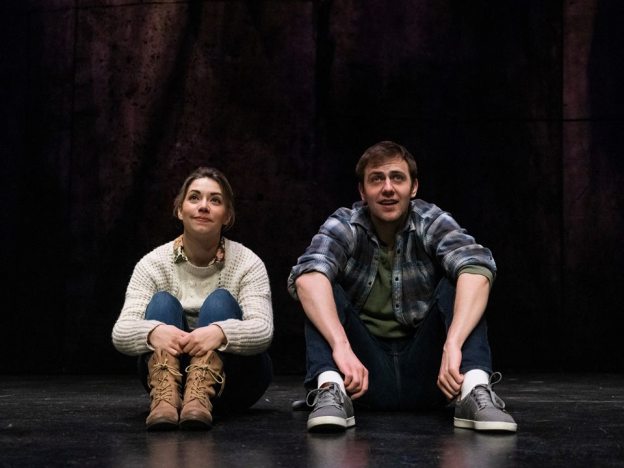
Last night I was able to attend the preview performance of Morningside Road, the musical created by Mhairi Berg and Simon Abbott. It’s the first production of Shadow Theatre’s new season, and it was directed by incoming artistic director Lana Hughes.

I was enchanted. Right from entering the auditorium and seeing the set – I thought to myself, I bet that’s a Daniel van Heyst design, and I was right. The set includes a realistic homey kitchen nook with tea things and a collection of family photos, but also a more abstract area with bits of low stone wall, which becomes various outdoor city locations.

I stayed caught up in the story with three likeable characters, Elaine (contemporary Elaine was played by Maureen Rooney and Elaine of memory was played by Mhairi Berg), the Girl (Elaine’s grand-daughter, Mhairi Berg), and the Lad (Cameron Kneteman). It wasn’t the first “how my grandparents met” play that I’ve seen – Megan and Beth Dart’s Ursa Major was another memorable one – but the story was engaging and the structure worked very well, shifting between now and back-then, between a kitchen in Canada and a city street in Edinburgh. The pacing was appropriate – I never felt like a scene or a song was too long, and I appreciated the various musical callbacks and familiar riffs adding to the continuity. Partway through, I realized that part of what I was admiring was deft lighting design (Liekke den Bakker), with smooth shifts between times/locations/moods and no heavy-handed dimming of areas I was looking at. Costuming (Kat Evans) was that kind of deceptively-simple that perfectly suited the characters and setting but didn’t distract. Of course practical-grandmother Elaine would be wearing slacks and long cardigans and the same comfortable shoes that my own mother wore for years, rather than more old-fashioned housedresses and aprons, and the other performers wore vaguely-timeless outfits that weren’t out of place in 1940s Edinburgh or in the more modern scenes.

The live musical ensemble of Simon Abbott, Curtis den Otter, and Viktoria Grynenko is located upstage centre behind a screen, which worked very well for sound balance and also allowed for the actors to include them in some scenes more actively. One of the songs, That Blessèd Wedding Day, was a lively catchy community-storytelling piece with dancing, in a folk-song idiom like Great Big Sea.

Rooney’s Elaine has clearly been telling stories about her life to her granddaughter for many years. The two of them are allies, more strongly connected than the offstage daughter/mother in between. I was reminded of my own late (great-)Aunt Elaine, who came to Canada from Scotland as a war bride and remained a daily crossword-puzzle fiend well into her 90s. The motif of one person’s story becoming common property, so that the younger generation might object or correct when the grandparent tries telling the story differently (“that’s not right!”) was also familiar and fascinating. Suggestions of Elaine beginning to lose her memory / memories and executive functioning were also done with a light touch.

The music was lovely and it contributed to the storytelling and the character portrayals. I had not heard Rooney sing before, but I was very impressed.

I wasn’t able to see the version of this musical that Berg and Abbott presented at last year’s Fringe festival, so I can’t tell you how the Shadow Theatre production differs. But I was very pleased with this one – it is nuanced, affectionate, and wistful.

Running time is a bit under 2 hours – and just the length it needs to be. Tickets are available here, for the run continuing until November 6th.

Where You Are – family frictions and affection

Coralie Cairns as Suzanne, in Where You Are. Set and lights, Daniel vanHeyst. Costumes, Leona Brausen. Photo Marc Chalifoux.

I had read Kristen Da Silva’s play Where You Are a while ago. I couldn’t remember the details, just the tensions and affections between two sisters, Glenda and Suzanne, who live together on Manitoulin Island.

In the Shadow Theatre production that opened last night at Varscona Theatre, Davina Stewart plays restrained responsible Glenda, and Coralie Cairns plays Suzanne. With help from costume designer Leona Brausen, we see immediately that Suzanne is the kind of woman who gets up in the morning with last night’s mascara all over her face and a heavy-metal t-shirt along with her pajama pants, and Glenda is someone who always protects her skin with a sunhat and matches her purse to her shoes. The by-play between the sisters shows ongoing disagreements and old troubles but also a core of caring. Suzanne can’t talk to her grown daughter Beth without starting a fight – Glenda recommends that when Beth (Nikki Hulowski) arrives for a visit, Suzanne should just whistle instead of saying anything. We can also see hints of some other unspoken troubles – not overdramatic foreshadowing, but topics that the sisters have agreed not to address. Cairns and Stewart are brilliant together, hilarious in the superficial irritations of shared life while awkward in compassion.

Glenda and Suzanne’s neighbour Patrick (Brennan Campbell) drops in with a mis-delivered newspaper. Both sisters enjoy visiting with the handsome young man – Suzanne also takes the chance to talk him into fixing their shed roof. One of the funniest moments in the whole play concerns the roofing chore, and how Patrick responds to the heat, thinking himself alone.

As I said, I’d forgotten the plot details. After working on Mark Crawford’s comedy Stag and Doe for the last few months, I was laughing out loud hearing Patrick’s left-at-the-altar story and watching him make plans to attend his ex’s wedding.

It was easy to empathize with Beth, an only child frustrated by her mother’s and aunt’s well-meaning snoopiness into not telling them anything. As the play progresses, we also see them keeping secrets from her, all of which eventually come out. I was genuinely moved watching the comedic and defensive characters manage to connect with each other in the end. It felt very real. The script’s treatment of spirituality and religion was delicate and not ridiculous.

I also loved the specific reminders of Manitoulin Island, a beautiful part of Northern Ontario – the hawberry jelly priced higher for tourists, the “bicoastal” relationship one of the neighbours has with a woman from Espanola on the mainland, the way that missing the swing bridge timing can change destiny “like the Island wanted to keep me”. And the mention of a specific Toronto hospital cued me into the nature and severity of one character’s illness, due to memories of a family member spending time there long ago. None of this context is necessary to understand and enjoy the play; it just provided extra richness to my experience.

I couldn’t remember the title of the play beforehand, but now I understand it. Home is where you are, one character tells another.

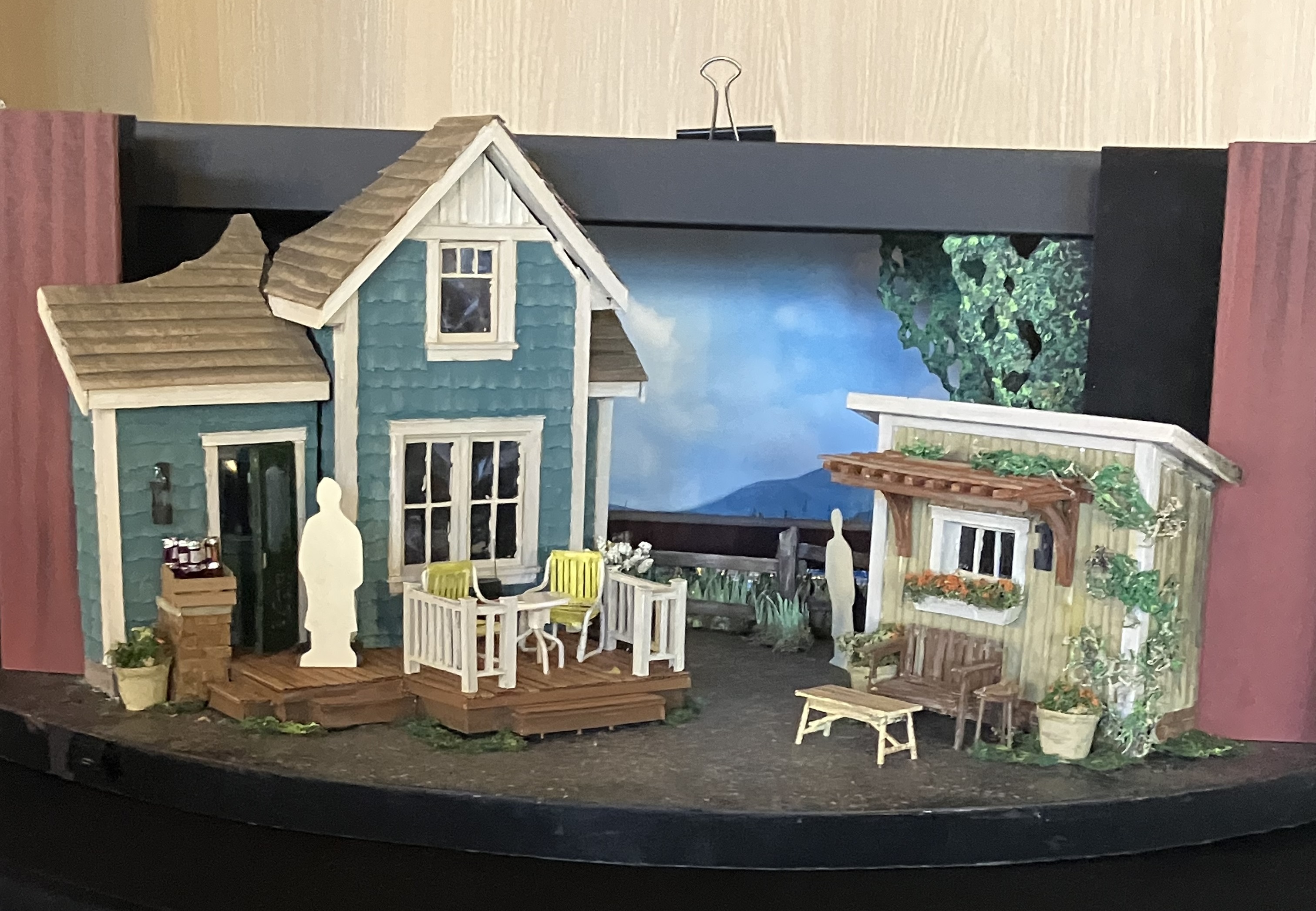
Daniel vanHeyst’s set model for Where You Are, on display in theatre lobby.

Set and lighting design are by Daniel vanHeyst. His typical attention to detail includes weathered shakes on the walls of the house, the rotating vent-stop bar at the bottom of the wooden storm windows, and lighting changes across fields throughout the day and night shown on a cyclorama. Darrin Hagen’s sound design includes many bits of original but almost-recognizable music.

Where You Are, directed by John Hudson with Lana Michelle Hughes as assistant director, is playing at Varscona Theatre until May 18th. Tickets are available here.

Intrigued by my mention earlier of Mark Crawford’s Stag and Doe? It’s playing at Walterdale Theatre until May 3 (tomorrow) with tickets here.

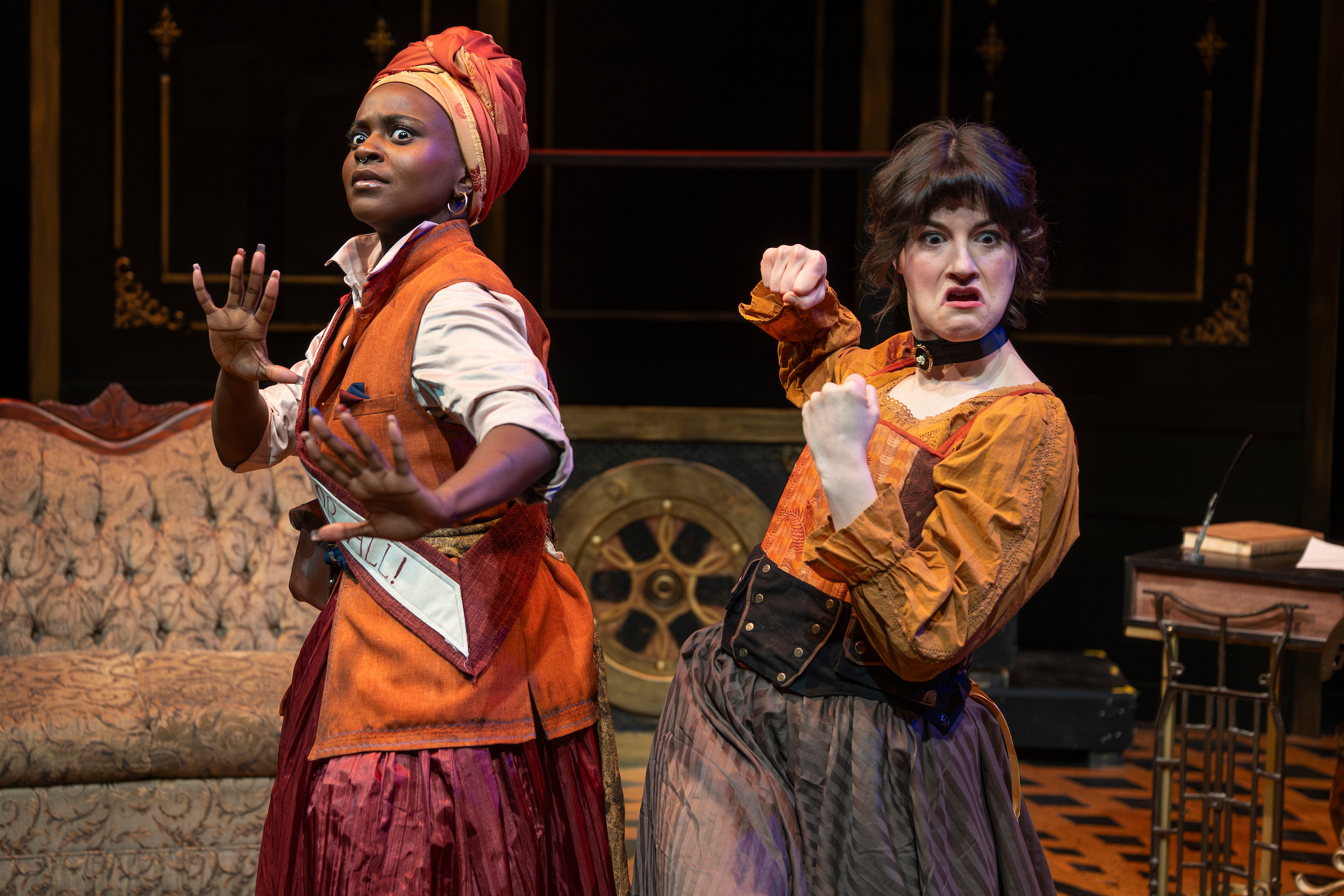
Lives around an artist – After Mourning – Before Van Gogh

Andrew Ritchie as Vincent Van Gogh in After Mourning – Before Van Gogh. Set and light design Ami Farrow, costumes Leona Brausen. Photo Marc J Chalifoux.

If I’d been asked to do a mind-map of what I knew about Vincent Van Gogh, I would have mentioned sunflowers and madness, Starry Night, Starry Starry Night, losing his ear, eating paint, self-portraits, suicide, and not getting recognition while he was alive. I’d remember looking at the outside of the Van Gogh museum on my short visit to Amsterdam and deciding that after exploring the Rijksmuseum all morning I needed lunch more than another gallery. And I’d thank Erin Hutchison for reminding me of a couple of those in the script of her musical Regression, from last summer’s Fringe, in which Tom Blazejewicz played the spirit of Van Gogh.

Calgary playwright Michael Czuba’s After Mourning – Before Van Gogh includes the artist Vincent Van Gogh (Andrew Ritchie) as a character, but focuses more on the family members who support him, especially his brother Theo (Steven Greenfield) and his sister-in-law Joanna Bonger (Lora Brovold and Donna-Leny Hansen).

The action unfolds in a non-linear way. At first, it was very disjointed, resonating with both Theo’s and Vincent’s struggles with mental illness. Projections by Matt Schuurman convey the characters being surrounded by Vincent’s paintings, in their home and in their minds.

Vincent’s sister-in-law Joanna is portrayed by two actors, Lora Brovold and Donna-Leny Hansen. Vincent’s brother Theo had struggled to set up gallery placements and viewings for Vincent’s paintings, but after both of them die young, Joanna inherits the challenge, along with inheriting Vincent’s work in trust for her young son Vincent Willem.

Donna-Leny Hansen and Lor Brovold in After Mourning – Before Van Gogh. Set and light designAmi Farrow, costumes Leona Brausen. Photo Marc J Chalifoux.

The use of two performers to show Johanna’s narrative arc was fascinating. Brovold and Hansen have a strong resemblance, enhanced by similar body language, and their portrayal of a passionate and determined woman of another era is thoroughly satisfying.

The split wasn’t as simple as, the older portrayal is completely recollective and the younger one is active, either. Brovold’s Johanna engages with her now-grown son Vincent Willem (Andrew Ritchie), by turns protective and petulant, and is shown making decisions of how to translate and market Vincent’s letters, and which paintings to sell where. She also reminisces, talks to her deceased husband Theo, and shifts into and out of overlapping scenes with her younger self. The younger Joanna of Hansen also has her share of recollections, as her first husband Theo becomes ill soon after their marriage. While honouring his memory and Vincent’s she must raise her young son alone, support her household financially, and act as Vincent’s artistic executor to find him the recognition he deserves. The script shows her brother Dries (Fatmi Yassine El Fassi El Fihri) urging her to accept their father’s invitation to move in and be cared for – but she chooses to move to a town where she can open a boarding-house for artists.

One of the most visually-effective moments is when the grieving widow plunges a white garment into a washtub, dying her clothes black for mourning. Another effective detail is the way the older Joanna hides her arthritis-cramped hands in her shawl after a session of translation work.

But, as in the title of the play, there is more to Joanna’s character than either mourning or making Van Gogh famous. At one point she muses about all the other things she could have accomplished – she could have worked for women’s rights, advocated for women’s health – and it did not feel anachronistic, but consistent with the determined woman we saw. She is also explicit about Theo not being the only/last love of her life – even though it makes her son uncomfortable, she reminisces about her relationship with second husband Johan (El Fassi El Fihri), and about other men she’d been with in between.

I was enjoying watching the performance – at one specific point I was so captivated by the beautiful projections that I forgot there were actors on stage – but for a time I thought I wasn’t seeing enough narrative arc to recognize what would be a satisfying ending. Yet I was wrong – I’d seen the threads leading to resolution wound through the other scenes, and the ending worked for me.

After Mourning – Before Van Gogh has two co-directors, John Hudson and Lana Michelle Hughes. This production is its premiere. It runs until April 6th, and tickets are available here.

Bea, by Mick Gordon

Kristen Unruh, in Shadow Theatre’s Bea. Photo Marc Chalifoux. Costume Design Deanna Finnman, Set Design Ximena Pinilla. Lighting Design Whittyn Jason.

Publicity for the Shadow Theatre show Bea had enough warnings that I knew it would be about a young person who wants to die with dignity or on her own terms. That topic’s not for everyone, so I was glad to know that much. Bea was written by Northern Irish playwright Mick Gordon, in 2010. This production was directed by Amanda Goldberg, a recent Artistic Director Fellowship holder at Shadow Theatre.

I was intrigued to see recent BFA grads Michael Watt and Kristen Unruh on a professional stage, along with Kate Newby (she played Dorothy Parker in Fresh Hell at Shadow a couple of years ago).

The other thing I knew about the production beforehand was that the set was partially crowdsourced. I saw an appeal from set designer Ximena Pinilla for old costume jewellery, so I dropped off a bag of shiny things. The focus of the set was a bed. On one side were the trappings of medical care, with one of those wheeled over-bed tables that I’ve seen in hospitals and nursing homes. On the other side of the bed were a young woman’s personal belongings and a rack of fabulous outfits. And above — suspended above and behind the bed were big grid displays of earrings. Like a Claire’s to excess.

Kristen Unruh’s character Bea enters, dancing, singing, sprawling on the floor to read a magazine. She might be sixteen, or a decade older, but she’s clearly lively and joyful and this is her space. Then a young man in rumpled shirt and too-short tie enters nervously, holding a satchel and his CV. Ray (Michael Watt) is her new personal care assistant – or he’s interviewing for the job, it’s not quite clear. And as the other character enters, Bea gradually melts onto the bed. She’s still animated, mouthy, full of poetry and wordplay, sitting cross-legged on her bed and enjoying putting the awkward young man on the spot. They connect. And in this first meeting, she asks him to take dictation, as she speaks a letter to her mother, saying that she wishes to die and wants her mother to help her.

Bea’s mother Catherine (Kate Newby) then arrives to give Ray a sterner scrutiny and tell him the rules of employment – from “No prurience” (which he admits he needs to look up later) and “Kindness” to “No secrets” – awkward because he is already carrying one secret, the dictated letter. As Catherine, a lawyer in severe black suit, grills Ray, I become aware that Bea has collapsed immobile onto her stack of pillows. Is this how her body really is, in the time of the play? We see this contrast playing out over and over throughout the narrative – Bea dancing and active alone and sometimes with Ray, but also needing to be fed and bathed, speaking with difficulty, twitching in pain.

I found the character Bea likeable and funny and frank. I revised my age-estimate upwards when she tells an uncomfortable Ray that she hasn’t had sex for nine years and misses it. Ray is clearly on her side. He jumps into her stories and daydreams, reluctantly revealing bits of his own context.

One of the most enjoyable bits of the play, for me, is the part where Ray brings in a script for A Streetcar Named Desire, introduces the classic, and reads it / acts it out with Bea. Both Unruh and Watt are up to the physical, emotional, and vocal challenges of these roles, and I look forward to seeing each of them again.

Every time Ray is taking frivolous liberties, though, Catherine walks in and is horrified. The audience gets to expect this. It’s still funny in a rule-of-three way, but maybe it’s not all needed. I do love Kate Newby’s still body language and flat affect with horror underneath.

In a few Catherine-Bea scenes, we learn that the two of them have been on their own for several years. They love and respect each other – and Catherine does still see Bea as the playful clever girl of the solo scenes and memories, not just the patient.

So the stakes are very high, when Catherine learns of Bea’s “demand”. And in fact even higher, because they live in a place and time without MAiD (medical assistance in dying), where assisted suicide would be prosecuted as murder. So in one shocking change-of-mood scene without Bea present, Ray explains to Catherine how it should be done, if/when she chooses. Details about how to ensure that a first attempt is successful, but also details about how to present it afterwards to the police and legal authorities. Blunt, explicit, disturbing. How does young Ray know all of this and speak with authority? I can make up a backstory but it’s not in the text.

The actors were great, but the script left me with some questions. I wondered if it would have been stronger if shorter, or if the repeating cycle of visits from Ray, revelations and intimacies, judgement by Catherine, re-connection between Catherine and Bea … was all necessary to make us care about Bea and her people and to see the necessity and the anguish of her death. The illness is not named, and that was probably a better choice than giving us a specific diagnosis that we might know about. We learn that she won’t get better, but it wasn’t clear to me whether she was getting worse and whether it would eventually kill her. There were a few Canadian references sprinkled in – the story about Ray’s friend trying to hold up a CIBC and accidentally going to Kentucky Fried Chicken was not the only one, there was a reference that made me think Toronto – but there was other wording that felt natively British (Ray’s friend in that story having a nickname like Bazza or Jazzer, for example) so that distracted me.

I have not been intimately involved with a MAiD or assisted suicide situation myself, although pre-MAID I have helped to make a decision to remove life support. The practical awfulness of implementing Bea’s request, as shown on stage, definitely confirmed my belief that there are some situations in which offering MAiD would be more humane. But, as the director’s program note quotes disability dramaturg Miranda Allen, “When MAiD is available and supports for living are not, MAiD becomes problematic.” That’s not relevant to the characters on stage – for them, assisted suicide is illegal, and it seems that Catherine is financially able to support Bea in comfort and employ Ray as caregiver. But it’s an important thought for any audience member who might go away smugly distancing ourselves from the dilemma of the play. Death and life are even more messy and complicated, in real life and real death.

Bea is playing at the Varscona Theatre on 83 Avenue until February 9th. Lots to think about, and more fun than I expected. Tickets available here.

Francis Pegahmagabow: more than two battles and a wry wit

Monica Gate, Julie Golosky, and Garret Smith, in The Two Battles of Francis Pegamagabow, at Shadow Theatre. Photo by Marc Chalifoux.

The Two Battles of Francis Pegahmagabow, by Neil Grahn, opened last night at Shadow Theatre. Today, November 8th, is National Indigenous Veterans’ Day. So it’s a timely opportunity to experience the story of one of them, in this world premiere directed by John Hudson and Christine Sokaymoh Frederick. I knew it was going to be about an indigenous soldier in World War One, and about the challenges he faced from racist/hostile regimes in Canada after returning home with medals, but I didn’t know much else. Garret Smith plays the eponymous Francis Pegahmagabow, and he starts the tale with military posture and heavy khaki, addressing the audience (or some other audience, it’s not clear and doesn’t matter), and explaining that the following narrative jumps around in time and we’ll have to pay attention. After that warning, I didn’t find it hard to follow.

It does jump around, with many short scenes, alternating between war scenes in and out of the trenches, and a mostly sequential series of glimpses from other important experiences in his life. There’s an ensemble of five other talented actors, each playing multiple roles with shifts in costume elements, posture, and accent: Trevor Duplessis (last seen at Shadow in Cottagers and Indians, and more recently in a reading at Workshop West’s Springboards festival), Julie Golosky (I know I’ve seen her on stage before but I can’t remember where), Monica Gate, and Ben Kuchera play military men, white bureaucrats, members of Pegahmagabow’s community (then called Parry Island Band), and various family members. The scenes where he meets and woos Eva, his future wife (Gate) despite her parents’ (Duplessis and Golosky) reluctance are especially charming. Kuchera has a continuing role as a naive fellow soldier, and disturbing ones as Indian Agents refusing Pegamagabow’s applications to the band’s loan fund, and threatening him with RCMP action if he doesn’t cease his political advocacy.

In warfare scenes, we see that Francis has hunting skills and knowledge that enable him to be an unusually effective solo sniper. We also see that his superiors want him to follow orders and rules – take a partner, go out when there’s a full moon – despite his insistence that he can do things better his own way. In conversation with the audience, he explains that being good at killing people is a terrible gift. Short vignettes allude to the available facts behind his three wartime decorations.

In wartime action, his peers and superiors show typical microaggressions (not learning to pronounce his name), but seem to accept him for his skills. After returning home, however, he encounters one frustration after another. The determination and volatility that made him an effective fighter are now employed as he becomes Chief of his Band and founder of national indigenous advocacy groups. Other members of his Band (Golosky and Gate) heckle him and suggest that he’s acting in his own interest. And his reputation of being unstable, quick to anger, or unreliable gets used against him by bureaucrats. It’s heartbreaking, except for the moments when he shows his pride in successes. When World War Two arrives, and the RCMP come knocking to enforce conscription, he and Eva send their boys away for their safety, and he adds that “None of our children ever went to residential school either”.

One of my favourite things about this script and production was the humour, especially the way Francis engages the audience on his side, allowing us to share his wry understated amusement at the predictable injustices of his life, starting with receiving a medal from the King who can’t pronounce his name. There are several moments in the script that break the fourth wall or theatre conventions – he compliments the booth crew on the nice job they did on the moon, and some other fun bits I won’t spoil. It’s not a completely happy story, but it’s told with a very light touch and Smith’s delivery makes me want to watch him in something else.

The abstract set (Cindi Zuby) provides opportunities for active scenes that feel like battlefield expeditions, like moments of comfort in trenches, like intimacy sitting together at home sharing bannock, and like meetings in offices and in convention halls. A backdrop evokes rough-torn cured hides and silhouetted landscape, and creates a surface for projections.

The Two Battles of Francis Pegahmagabow continues until November 24th, with tickets available here.

Tiny Beautiful Stories

Michelle Todd, foreground, and Michael Peng, Sydney Williams, and Brett Dahl, in Tiny Beautiful Things. Photo Marc Chalifoux.

If you haven’t already seen Tiny Beautiful Things, the Shadow Theatre production of the Nia Vardalos play currently running at the Varscona, do try to fit it in before it closes on Sunday afternoon.

Tiny Beautiful Things is a set of vignettes portraying the interactions of an advice-columnist, inspired by Cheryl Strayed’s essays based on her time writing as Dear Sugar. Michelle Todd is wonderful as the writer who lands the columnist gig, giving advice from her heart and from her own messy experiences. The character seemed so warm and human and honest, folding laundry in her house wearing mismatched loungewear/pajamas (Leona Brausen costumes), that I wanted to take her home.

The rest of the ensemble (Michael Peng, Sydney Williams, and Brett Dahl) portray people who write to her, and other people in her stories such as her mother. Each of them gets a chance to play people of various ages and genders, adding to the impression that there are a lot of different correspondents. I didn’t ever feel like any of the portrayals were caricatures.

During the performance, I was reminded of several other plays I’ve seen. The first comparison was with Veda Hille, Bill Richardson, and Amiel Gladstone’s Craigslist Cantata, the series of songs and sketches about transactional connections on an internet classified-ads site, but I quickly decided that Tiny Beautiful Things was less frivolous and more thoughtful, as the interactions through an advice-column were about seeking understanding, rather than finding second-hand property, missed-connections on a commute, or a metalhead roommate for a metal house (although that one was so catchy that now it’s an earworm again).

When I realized that the conversations between Sugar and the letter-writers, often physically located at Sugar’s kitchen table or in her living room, were being done without the actors touching, and usually facing towards the audience, I remembered Duncan MacMillan’s Lungs, also directed by John Hudson for Shadow Theatre, with Elena Porter and Jake Tkaczyk as an unnamed couple recollecting the milestones in their relationship, while speaking to an unseen listener and never touching, not even in the sometimes-hot sometimes-hilarious sex scenes. And then in one of Sugar’s conversations, they do touch, and it matters.

Sugar’s advice and support, completely grounded in love, and the heartbreaking range of the ordinary people’s problems, also reminded me of a newer script which none of you have seen yet, unless you’ve been in a rehearsal hall at Walterdale Theatre during preparations for next week’s new works festival From Cradle to Stage. The festival, running May 14-19, presents three staged readings each night, for a total of nine new scripts by local playwrights. I helped select them, so I think they’re all worth seeing – but the one that came to mind yesterday when I was watching Tiny Beautiful Things was Kristen M. Finlay’s Modern Day Saints. In Finlay’s script, ordinary contemporary women struggle to do the right thing in a range of difficult and painful and familiar situations, starting from a student without enough money to pay her tuition fees dealing with unsympathetic bureaucracy. As in Tiny Beautiful Things, the glimpses of compassion and hope in the ensemble vignettes are life-affirming.

Tiny Beautiful Things starts with an electronic tone, and then another – I thought, is that a message notification? is that a piece of original music? and then I thought, Oh, there’s a Darrin Hagen sound credit, I bet it is both. And it was.

It goes without saying that it made me cry. In a good way. It also made me feel grateful for having friends to tell life stories with, and for seeing how crafting an experience into a story helps make sense of it.

Tickets for Tiny Beautiful Things are here. Tickets for Walterdale’s From Cradle to Stage festival May 14-19 are here. Modern Day Saints plays on May 17 and May 18 – but descriptions of all the new plays in the festival, by Bridgette Boyko, Donna Call, Kristen M. Finlay, Grace Li, Shawn Marshall, Madi May, Blaine Newton, Logan Sundquist, and Michael Tay are here.

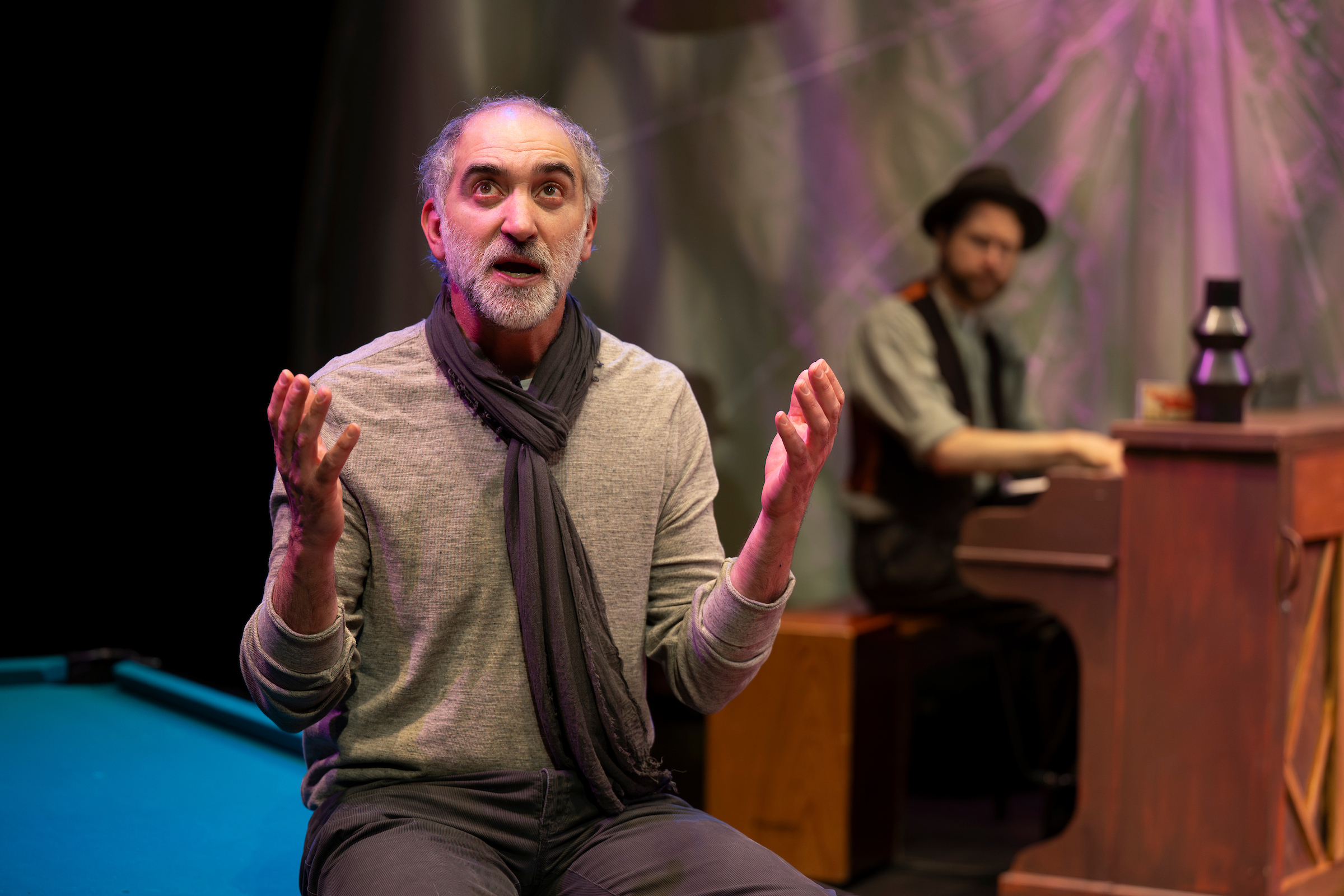
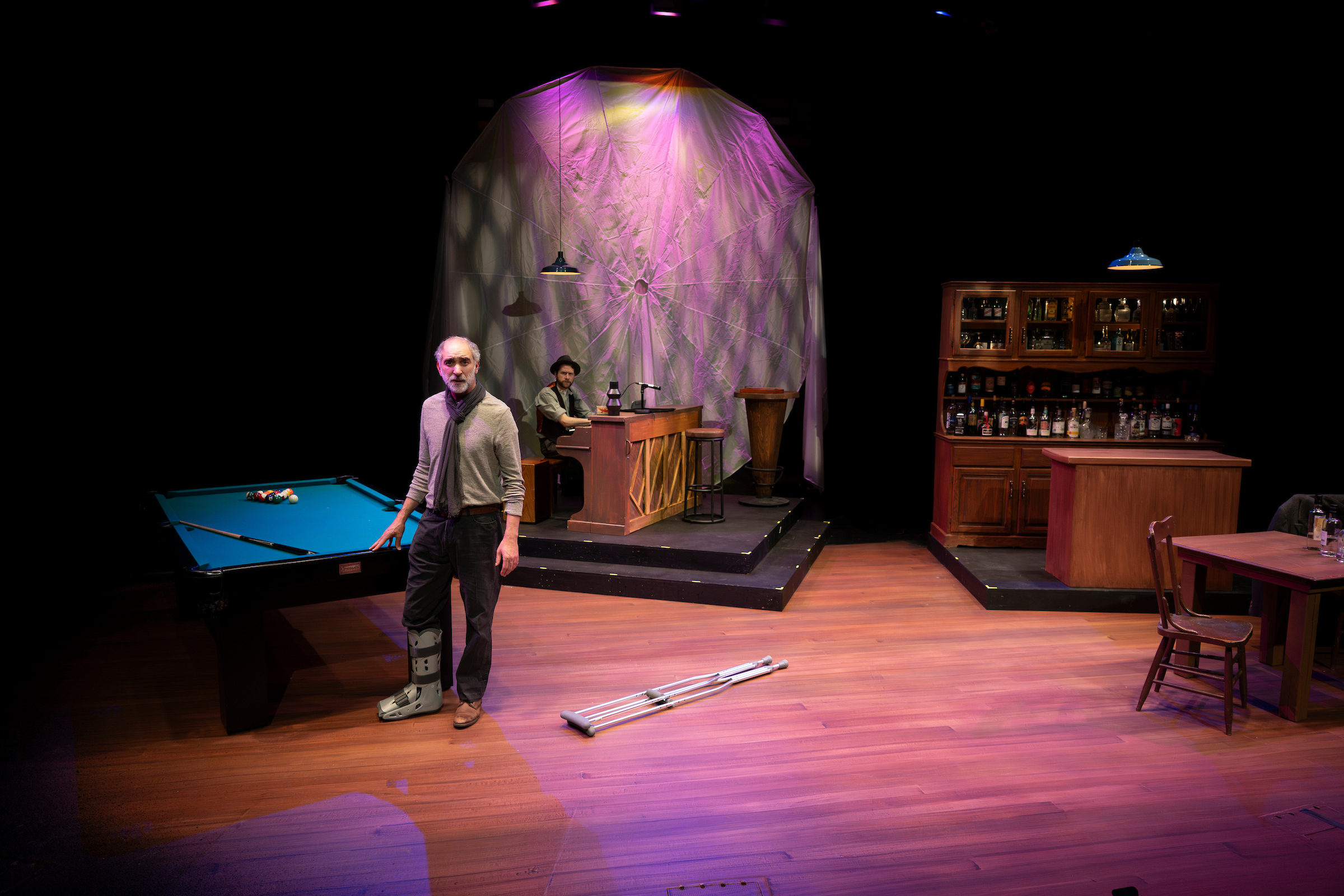
A gay community and an era and two lives, through ten funerals

Jake Tkaczyk and Josh Travnik, as Younger Jack and Young Maurice, in 10 Funerals. Photo by Ian Jackson, Epic Photography.

Occasionally I am watching some fictional characters on stage (or on screen, or in a novel), wondering what’s going to happen to them next. And suddenly I’m astonished to realize that these characters do not even exist outside of the scenes that I am seeing. That happened to me tonight, partway through the performance of 10 Funerals, Darrin Hagen’s new play directed by John Hudson for Shadow Theatre. I wondered about some things between the scenes, and about what was going to happen after the final scenes had played out, and I had totally forgotten that these characters were not real outside of this script – because they felt so real, so believable, so irritating and stubborn, so consistently themselves throughout the 35+ years spanned by the storyline. Which is particularly impressive, because each character is played by two actors alternating. Young Maurice is played by Josh Travnik and Older Maurice is Doug Mertz, and Jake Tkaczyk and Nathan Cuckow play younger and older Jack, respectively.

One fascinating thing about watching this production is working out which young character grows into being which older one, and learning about why. Some mannerisms continue, and some of the couple’s habits and rituals and petty arguments recur. I won’t point them out, because it’s more fun to notice them.

And at the same time we are watching this particular couple through the years of their life together and the various funerals they attend together, we’re seeing the personal effects of various aspects of gay men’s lives through the last 40 years. Not just the community funerals of the early years of the AIDS crisis, but the experiences of leaving small judgemental towns for cities with their own dangers, the various relationships with families-of-origin, the issue of not having a good word to describe what they are to each other, or the legal recognition of their relationship – and also the bars, hookups, drugs, drag queens, music, and style. Oh, the style! – costume designer Leona Brausen has done an amazing job of capturing the changing fashions in clothing, hair, and facial hair over the periods, and illustrating the differences between the characters, even in the understated situations of dressing for funerals.

Parts of this play are sad. Parts of it are horrifyingly illustrative of how the injustices of our lifetime have not all gone away, but we’ve become accustomed to them. But some of the dialogue and physicality is absolutely hilarious. 10 Funerals is playing at the Varscona Theatre until May 14th – including Pay what you can, Two for one, and Safe Sunday performances. Tickets here or at the door.

Shadow Theatre’s Lungs

Photo of Elena Porter and Jake Tkaczyk by Marc J Chalifoux Photography

The play I saw last weekend, Small Mouth Sounds, was like an exercise in telling a story on stage after removing almost all of the spoken words.  All the other parts of how a story is supported on stage, the costumes, the props, the actions and stage business, the set, the lighting and sound effects … they were enough.  I watched various characters arrive at a retreat centre, and I could tell what they were like and how the retreat was going to work for them.  One arrived late and on her phone, one slipped his flipflops gracefully into the shoe rack at the side and sank into a meditation pose that was in everyone else’s way, one wore a Tilley hat with chinstrap and an MEC catalogue full of outdoor clothing … I was anticipating all the ways these people might get on each other’s nerves over the weekend, and I was kind of right.

The current production in the Shadow Theatre season, Lungs by Duncan Macmillan, could be the opposite exercise.  It’s as if the playwright, and the director John Hudson, and the designer Elise Jason, all sat down and said, what if we gave them great words, but almost nothing else –  a big bare stage, no props, one simple costume each, no sound cues, near-imperceptible lighting shifts – and launched them into the narrative of two people in the middle of a conversation they’ve never had before.  “A baby?” , Elena Porter’s character responds incredulously to a question Jake Tkaczyk’s character must have asked just before the lights came up.  He’d been thinking about it for a while, and although she’d assumed it would happen sometime in her future, she hadn’t thought of the future being now.   So they talk.  And they avoid talking.  And they talk some more.

Is it the right time for us?  Is it okay for us to want a child when the planet is already overpopulated?  The couple jumps between their personal anxieties “I want to still read books and do things” “I don’t want to be one of those fathers who never notices his kids unless they’re winning.” “What if I don’t bond with it?” and their bigger-picture worries about the state of the environment.   They reassure each other they are good people who bicycle, recycle, and buy coffee from local independent shops “even when it tastes like dirt” – but here they are, trying to create another person anyway.  In some ways, the script is specific to the 2019 flavour of those big-picture anxieties – partly about climate change and partly about doing the culturally-agreed right things – but the motivations and worries would be familiar to people of previous generations as well.  “This isn’t the best time, I take it, to be giving hostages to fortune?” as fictional character Lady Peter Wimsey (nee Harriet Vane) announces her pregnancy to Lord Peter in Thrones, Dominations in 1936.

Mostly, Porter’s character is the one whose worries are full of words, spilling over each other and contradicting each other, but Tkaczyk’s character (they don’t have names) also gets an anxiety monologue when he can’t sleep.

The script cuts brilliantly from the middle of one conversation to the important bit of the next one.  We don’t see the characters having sex – we see them looking at each other realizing they both want to, and then we see them collapsed in bed afterwards appreciating it.  Or, in one marvelous scene, we see them after the concept of conception has actually ruined the mood.  Not in the more-commonly-portrayed way of people feeling required to perform on schedule, but she wants the act to be romantic and symbolic, and she is put off by what she calls his “porno face”.

And, true to my own perception of life, things seem to speed up as life goes on, until the important bits flash by with one poignant line each (and usually a “where’s the camera?”)   It matters that the action starts in a near-contemporary time, because by skipping ahead to later in the characters’ lives, we also get disturbing hints of what the playwright is imagining for what the environment and the world might be like in the future by the time the characters get old.  I don’t think I’ve seen this done before, much.

Lungs is playing at the Varscona Theatre until Sunday March 31st.  Because the performers both joined the production on short notice, in the early performance I saw they were both carrying scripts – but it didn’t matter much.  I didn’t find it distracting, and it didn’t seem to prevent them from connecting with the audience and with each other.  I cried.


First Time Last Time

Last night was the preview of the last Shadow Theatre show at the Varscona before they close for the long-awaited renovations – the first time of the last time.

John Hudson directed Scott Sharplin’s two-hander about the relationship between two awkward diffident quirky characters, Ben (Mat Busby) and Airlea (Madeleine Suddaby).  The characters start by addressing the audience directly, explaining that they’re going to tell the story of their relationship and then getting sidetracked in questions of the definition of story and the definition of relationship.  I’ve seen Mat Busby before doing characters whose social awkwardness was part of their charm (The Jazz Mother, The Invention of Romance), and although Ben was not the same character as either of those I appreciated him in a similar way.  Airlea was the more outgoing one of the pair, more resistant to romance or commitment, but a recurring theme is her wanting him to dance and him refusing.

A succession of scenes interspersed with bits of narration to the audience shows the progression of their lives and their interactions, from the night they first meet through deciding to stay together with “no ties and no lies”, the life-milestone of friends’ weddings, and then working out what they want as the original “contract” becomes less of a good fit. Their banter starts out charming and very believable, and the deeper issues encountered later in their lives are addressed with home truth and a light touch.

Cultural referents that wrapped around the story include “The Lady, or The Tiger?” (the Frank Stockton short story), “Let’s Do It” (the Cole Porter standard), and astrology vs astronomy.  A small symbolic gesture including the audience near the end brought me to tears with its simple perfection.  First Time Last Time runs until March 29th, with advance tickets available at Tix on the Square.


Sequence – convoluted and thinky

Shadow Theatre’s current production Sequence is their last in the Varscona Theatre before it closes for major renovations.  Calgary playwright Arun Lakra entwines two stories to explore the topics of luck, probability, providence, genetics, free will, religion, dramatic coincidence, Fibonacci series, and disability.    John Hudson was director.

In one story, Coralie Cairns plays a cranky tenacious genetics professor and researcher who is going blind, and Chris W. Cook plays an unusual student.  In the other story, Frank Zotter plays a  very lucky man, on a book tour to promote his book about luck, and Caley Suliak plays an audience member who wants to benefit from or to disprove his streak of luck.  The action switches from one side of the stage to the other, at first with no apparent connections between the themes or narratives but various similarities gradually arising.  The show program includes two pages of glossary for the scientific terms and science-fiction-culture terms used by Cairns’ character.  I’d like to say that I didn’t need any of it, but reading them ahead of time did add to my understanding.  The cleverly-plotted piece seems to follow the Chekov’s gun rule strictly, but near the end I was not completely sure that I knew what the playwright had intended the connections and resolutions to be.

The set (designed by Lisa Hancharek) was also filled with fascinating details such as wall shelves reminiscent of representations of DNA spirals.

Sequence continues at the Varscona until this Sunday afternoon, November 16th, with advance tickets at Tix on the Square and cash tickets at the door.