The Bridges of Madison County – catch it this weekend!

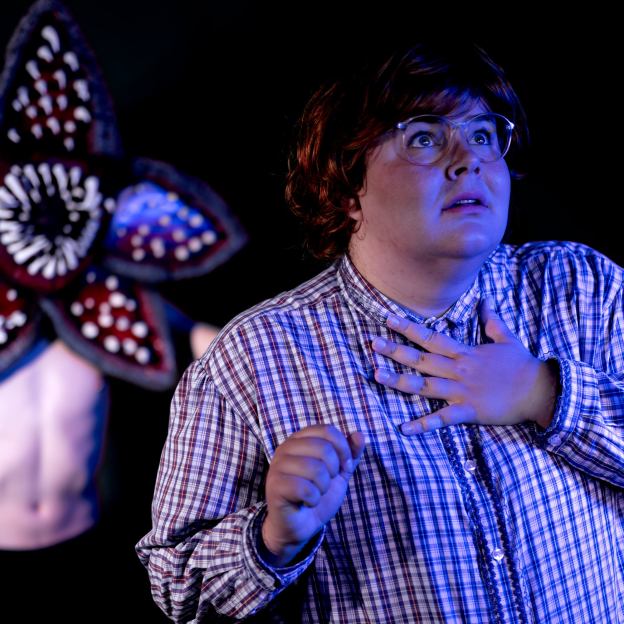
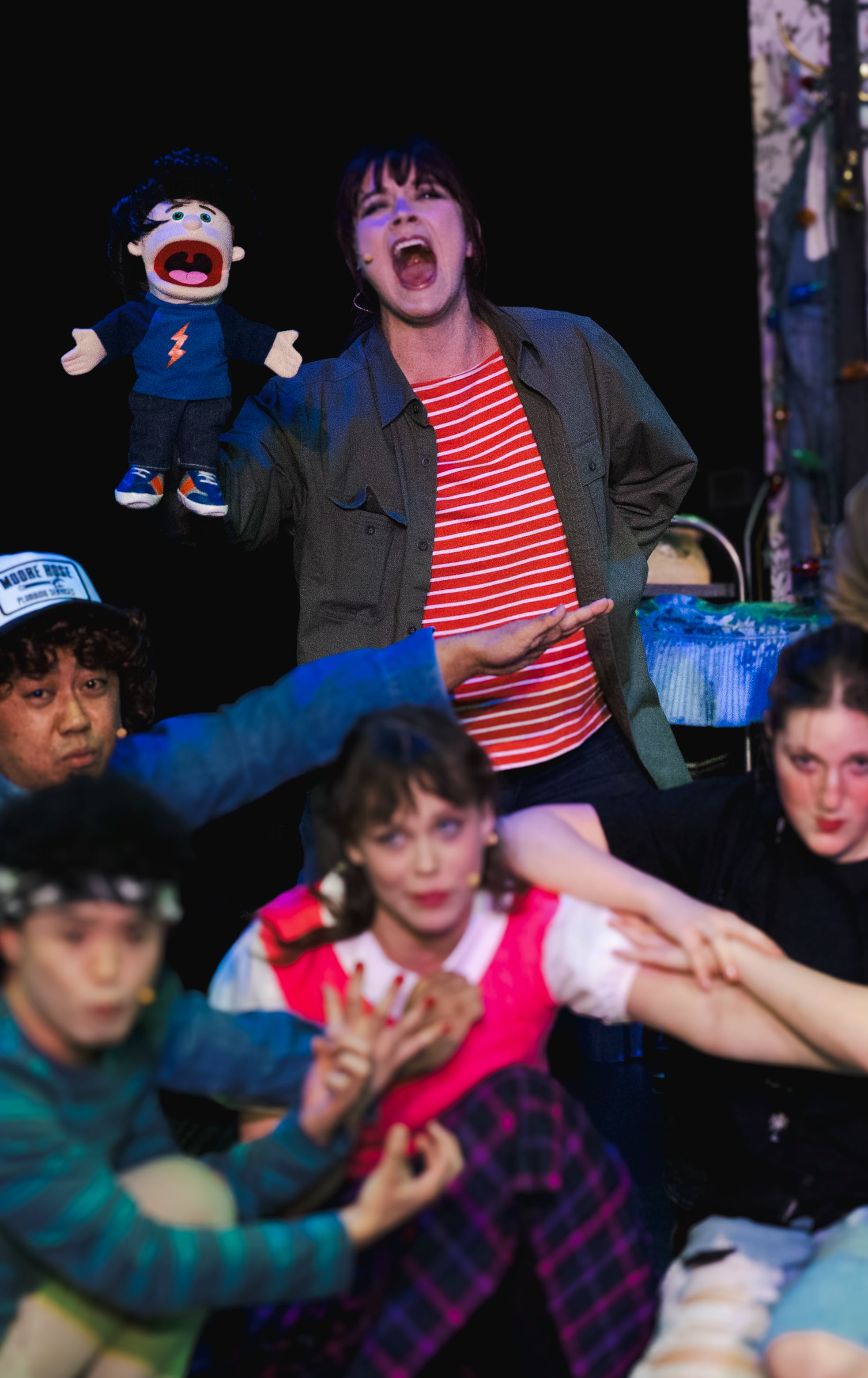
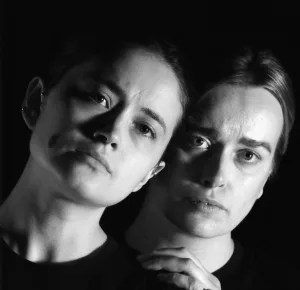
Vincent Roberts, Liam Lorrain, and Nicole Gaskell in The Bridges of Madison County. Photo credit @karalittlephoto.

You might be familiar with The Bridges of Madison County as a novel written by Robert James Waller in the early 1990s, or as a movie starring Meryl Streep and Clint Eastwood, mid 1990s.

It’s also a musical – book by Marsha Norman and music and lyrics by Jason Robert Brown. The local musical-theatre company ELOPE is currently performing this musical in a short run at Varscona Theatre. If it sounds interesting to you, catch it soon – it closes Saturday night.

The Bridges of Madison County is a story of love, of longings and loyalties, and overwhelmingly a re-creation of a place and time. It’s set in farm country in Iowa, mostly around one farmhouse kitchen, in the 1960s. The main character, Francesca, (Nicole Gaskell) was a war bride who met her US serviceman husband Robert (Vincent Roberts) in Naples, and has lived in Iowa ever since. They have two children, Michael, 16 and restless (Liam Lorrain), and Carolyn, probably about 14, who loves 4-H and farm life (Cassidy Galba).

After an opening solo in which Francesca tells her story of moving to the US post-war, with hat, gloves, and suitcase, with a backdrop of black-and-white slide images, the action of the musical opens with family and friends bustling around Francesca in her kitchen, before she sends her family off to show a steer at the State Fair, looking forward to a few days of privacy and quiet. The first scenes show the affectionate and busy atmosphere, the co-operative farm community and the challenges of parenting teenagers. It’s easy to sympathize with the quiet woman wanting some alone-time.

But if you know the story, you know that while Francesca’s family’s away, she unexpectedly chooses a romantic liaison. National Geographic photographer Robert (Martin Galba) stops by looking for directions. She helps him out and finds out that he’s a solitary nomad who has photographed her hometown of Naples. They talk about the longings and losses in their lives, and find feelings for each other. I’m always a bit skeptical of instant-soulmate stories (even for teenage characters like Romeo and Juliet or Maria and Tony), so I tend to get stuck on this part of the plot. But I appreciated that the writers, director, and actors did not make Francesca’s husband Robert a caricature of unsympathetic husband either. Director Cory Christensen said “It was important to show that Robert isn’t stupid and mean, that he’s a good man, likeable.”

Details are elided, reproducing the novel’s feel as a poetic interlude, four days out of normal life. But the phone keeps ringing – Francesca’s husband, accustomed to sharing daily life with his wife, Carolyn and Michael, complaining to Mom about their lives, their father, and their future plans, and her neighbour and friend Marge (Erin Foster-O-Riordan) who has guessed what’s happening. We can’t forget that Francesca has loyalties and commitments, and neither can she.

It was clear that the story could not have a happily-ever-after ending for everyone. The ending it did have was honest and credible and poignant, although shifting time to show later-life outcomes for all led to a slower-paced ending. I was impressed by how the actors playing the teenagers shifted to being credible as 5-7 years older.

I thought all of the singers were very good, particularly Nicole Gaskell in the role of Francesca. Her program bio says that she’s recently returned to Edmonton from studying and working in the UK, and I hope to see her again on Edmonton stages. There were some ensemble musical numbers near the beginning where I found it hard to make out the words, possibly due to sound balancing difficulties. Joy van de Ligt, music director, led an orchestra of seven. Morgan Smith and Avery Neufeld completed the acting ensemble.

Design choices enhanced the storytelling in many ways, particularly the lighting design of Rebecca Cave, with spectacular Iowa skyscapes and kitchen-table intimacy. The kitchen was cleverly evoked in Leland Stelck’s set design, by a few moving pieces and a chrome-edged table and chairs. Director Christensen pointed out that the corn silhouetted against the sky was actually real corn stalks, obtained from a local corn maze.

This is the first time an ELOPE show has used the Varscona Theatre venue. The auditorium is smaller than the Westbury, and more intimate than Le Théâtre Servus Credit Union, with the audience closer to the stage and warm acoustics. The company has usually been doing one large musical a year (Rent, Joseph and the Amazing Technicolor Dreamcoat), but is expanding this season by adding this short run of a smaller-cast show. Their season will continue with a production of Amelie, June 26-July 5, 2025, at the Timms Centre, U of Alberta. Kristen Finlay will direct and Sally Hunt will be music director.

Shall I draw an analogy between Francesca’s impulsive grasping at her opportunity of connection with Robert, and a recommendation to book your ticket to this short run of The Bridges of Madison County before it closes Saturday night? Perhaps not – you have no reason to hesitate, and more chance of regrets if you miss it! Saturday also has a matinee. Tickets are available here.

Magic, survival, and hidden patterns – a Fringe weekend

The last four shows I saw in Fringe 2024 included two shows with stage magic and two shows with young women prepping for endtimes or disasters. But four very different experiences!

El Diablo of the Cards was a solo sleight-of-hand performance by Ewerton Martins of Brazil, in red nose. He greets guests in line outside Gateway Theatre, then seats some people on the stage of the intimate black box and goes back outside to announce more arrivals as “next victims!” and keeps promising that the show will start in five minutes. Eventually he taps one of the audience members to give him an introduction, and the one who did it in the Saturday show did a great job. His patter is amusing and he gets help from several audience members without making fun of them. And his tricks are astonishing and delightful.

kicked in the end: a magic show was a solo performance by actor/magician/academic/author Shawn DeSouza-Coelho, in the Kick Point OSPAC space. This charismatic performer also engaged with audience members before the official show start, and then reminded us that as per the show title, before the end of show, there would be some kind of kicking of someone. While we were puzzling over that one, he gave us a long riddle of descriptive poetic phrases that didn’t fit together at all, and then gave us one word that made them all make sense. He engaged audience assistants to conduct various magic tricks. I wasn’t sure what to attribute to physics, what to attribute to impressive “reading” of participants, and what was actually sleight of hand. In between, he told stories from his life which would have made an interesting show even without the magic and interaction. Later it became clear that just as the apparently-unconnected lines of the riddle made sense once the keyword was revealed, the anecdotes also had a common thread in racist microaggression. The structure of the show, particularly the ending that subverted my expectations of what a performer “owes” the audience, had me feeling as if I discovered my own problematic beliefs rather than having someone else call me out, which was much more effective. (Emo Majok’s gentle poking fun felt similar). I don’t know whether the performer teaches undergraduates, but I hope for the sake of York students that he does. Shawn DeSouza-Coelho is also the author of the fascinating biography of Stratford stage manager Nora Polley, Whenever You’re Ready, which I recommend.

Let’s Not Turn on Each Other features creative partners and recent BFA grads Jacquelin Walters and Michael Watt, who have been making performances together at Nextfest, at U of A New Works, and elsewhere. This one, billed as a play with original folksongs, was performed at Spotlight Cabaret, but is going to be held over at the Westbury Theatre next Friday and Saturday. (Note – you might remember that in past years, holdover performances cost more than tickets to regular Fringe shows. This year they’re a flat $20 – the same as the maximum price during the festival.)

Anyway, it’s weird, and playful, and engaging. The two performers, wearing plain modest dresses and blonde milkmaid braids under kerchiefs, are members of a guild, assigned to guard an outpost until they get a signal from their leader. It’s not clear if this is a religion or a doomsday-prep group or what, but they both seem completely devoted to their required daily schedule and the instructions they get from cassette tapes. They sing and play instruments, they make an expedition around the audience space which culminates in some participation from Spotlight serving staff, and eventually they make some discoveries that upset their belief system. See the holdover — and watch for these two in future. I understand that Michael Watt will be playing the eponymous Shrek in an upcoming Nuova Vocal Arts production.

W.R.O.L. (Without Rule of Law) has a more realistic setting and tone, but again it seems to be about a group of young-teen girls who have deviated from standard Girl Guides curriculum to teach themselves survivalist prepping. The script is by Michaela Jeffery – previous works of hers I’d seen in Edmonton were Sundogs (Fringe 2014) and The Listening Room (Cardiac Theatre, 2018). Emily Marisabel directed W.R.O.L. Set designer Amanda Bertrand and prop designer Kevin Cambridge have constructed an impressively detailed space for the group to explore, especially given the 15-minute limitations on setup and strike for each show. Performers Robyn Clark, Baran Demir, Astrid Deibert, Emily Thorne, and Jordan Empson bring five different characters to life, each with their own needs and motivations for becoming competent and independent. At first, the group’s concerns about solving mysteries and defying school restrictions seem immature or foolish, but by the end it seemed to me that they had credible good reasons to mistrust their authority figures, reasons that many contemporary young people might share.

Fringe Day Nine: assorted stories – but not storytelling shows.

Heading into the last weekend of Fringe, on Friday I watched three fun shows.

Verbal Tapas is a collection of poems by longtime Fringe poet and storyteller Rob Gee. Instead of scripting a fixed order, the performer handed out “menus” on the way in, with various poem titles and descriptions that sounded like restaurant-food teasers. He invited people to shout out titles, after which he might tell an anecdote of context (the time he recited a poem to two police officers in the middle of the night who had stopped him from illicit postering, the creative-writing groups he’d run as part of his work in mental-health nursing, etc) and launch into a recitation. He kept having good lines which I’d try to remember and then they went out of my head with laughing. Acacia Hall is a good venue for this kind of solo with audience connections.

Canterbury Tales has been adapted from Chaucer’s much longer Middle English original by local theatre artist Donna Call. This version has six travellers acting out each other’s stories to entertain the company, and the role-shifting is amusing. Lee-Ann Semenya plays the innkeeper who sells them drinks, proposes the storytelling competition, keeps things moving, and then covers them up with blankets for the night. I don’t know the original very well – the character names were familiar (the confident and ambitious Wife of Bath played by Amanda Stout, the Miller played as a lout by Ryan Mattila), but I didn’t remember the content of any of the stories. Other performers were Martin Stout, Zack Siezmagraff Penner, Anne-Marie Smyth, and Karen Huntley.

Field Zoology 301: Myths and Monsters is part of a series, in a campground-lecture style. Performer Shawn O’Hara, as Doctor Bradley Q. Gooseberry, welcomes his students around a campfire to teach us about cryptozoology, or the study of legendary/folkloric animals. He makes imaginative use of sketches on an overhead projector to illustrate his tales, including most of the cryptids I’d heard of and a few that were unfamiliar to me, along with some very funny narrative of personal encounters. Afterwards, the performer removes Dr. Gooseberry’s extravagant mustache from his own, to thank his contributors, including people who helped him to navigate telling stories respectfully from Indigenous sources. I would definitely see other shows in this series. This was my first glimpse of Mile Zero Dance as a Fringe venue, and an opportunity to spend time in the Happy Beer Street area of West Ritchie, which was exciting. However, I found the seats uncomfortable, and the full room too hot in last night’s warm humid weather.

Fringe Day Eight – second wind

With no volunteer shift and no stage-management duties Thursday beyond a bit of show laundry, I spent the whole day going to shows that people had recommended to me.

Emo Majok: Australian Aussie was in the intimate space of Acacia Hall. I had heard his guest piece at Late Night Cabaret the night before and was looking forward to it. The stand-up comedian weaves in anecdotes about being challenged by his 7-year-old daughter to leave a job he hates and make a career in performing, about being born in a refugee camp and migrating with his family from Ethiopia to Kenya to South Africa and then Australia, about being Black in Australia (“the Australian indigenous people were the original Black people there, until blacker people arrived”) and in other parts of the world, about being a parent, and other relatable and gently hilarious comments. Emo engages with various audience members individually, teasing a bit about a few immigrant stories and career dissatisfaction stories as well as family groupings (a 60-years-married couple had come with their grandchild, so he congratulated the couple and told the grandchild that it was good of them to spend time with their grandparents but they should get some actual friends).

HerPlease is also in a small performance space, the Nordic Studio Theatre in the Arts Barns. Solo artist Kate Tobie of Minneapolis appears wearing a large vulva costume, from which she pulls out various props while telling stories of her sexual and romantic history and providing some incidental public-service information. Her backstage assistant (not identified, but appearing for bows) is probably very busy, helping out with the various physical bits. Alongside the bigger reveals of the story, I was particularly struck by the comments about enjoying the messiness of having a body while encountering messages of shame about it. HerPlease has shows tonight (Friday) and tomorrow (Saturday) late afternoon.

What a Young Wife Ought To Know made an interesting thematic double-feature with the previous show about women’s (mostly-heterosexual) sexuality in the 21st century. The Hannah Moskovich script, last seen locally as done by Theatre Network in 2018, is tackled here by local indie company Shattered Glass Theatre, directed by Sarah Van Tassel. If you are open to watching a drama in your Fringe-going, consider this one. It is very well done, compelling and well-paced. Abigail MacDougall is breathtakingly heartbreaking as the central character Sophie, starting as a naive 15-year-old who admits she kissed the post-boy because she felt sorry for him having TB, and going through her crush on Johnny, who works at the nearby hotel stables, to marrying him, having several children despite risks to her health and very limited household money, and following through on some very difficult decisions brought about by those circumstances. She breaks the fourth wall between scenes to talk frankly to the audience, mostly directed at other married woman, to ask “what do you do?” and “what would you do?” type questions. Patrick Maloney plays Johnny, and Sarah Spicer plays Sophie’s older sister Alma, both of whom also experience sad outcomes related to their lack of reproductive choice, as a working-class couple in the 1920s.

Batman, Bob, and Bill is an original drama written by Andrew Boyd of No Tomatoes Theatre about the artists who created and developed the Batman stories. Andrew Boyd and Connor Meek play the main characters, with an ensemble of Brooke Hodgson and two more people (I couldn’t find a show program/credits). I thought the ensemble was very well used, as artists sketching in sketchbooks at the back of the stage and discarding some of the results, then shifting to play minor characters, move set pieces (rehearsal boxes with comic-book art on them), etc. It’s playing at venue 18, the Lutheran church hall across the street from Grindstone.

WINNING:Winning is described as a mostly-silent clown show, by Gordon Neill. With lots of artist assistance and no talking, the character works through some of his challenges and fears on stage, while being less compassionate towards himself than the audience is. Near the end, the character and performer merge and speak, giving some of the bigger picture of where this production came from. It was directed by Isaac Kessler (of 1-Man No-Show, etc) and was not only entertaining but moving.

An episode of Die-Nasty and a Late Night Cabaret visit made a long day, but I wouldn’t have missed any of it.

Have a great Fringe weekend!

Day Seven – sketch comedy, improv, and magic

Sketchy Broads: Choosing the Bear is a sketch-comedy show written by five local multidisciplinary comedians: Nikki Hulowski, Lindsay Walker, Kristen Welker, Jules Balluffi, performers, and Jennie Emms, who is in the booth as stage manager and appears in one cameo bit. My favourite sketch comedy shows are the ones with so many funny bits that they don’t linger on any of them, just – punchline! boom – and then a lighting shift and segue into a different scenario with different characters. Sketchy Broads did this very well. There were some sketches in which they performed male characters, and some in which they were women dealing with men (offstage or onstage). There was also one very funny small child character. There was laugh-out-loud silliness, there was a recurring bit about a har-har eavesdropper taking conversation out of context, and there was a surprisingly-poignant scene set at an anti-feminist convention.

Let’s Go to the Phones is an improvised radio call-in show by the Irrelevant Show crowd, in the Spotlight Cabaret restaurant. The performance I saw had Peter Brown hosting and familiar comedian/improvisers Cody Porter, Dave Clarke, Donovan Workun, and Chris Borger alternating as guest experts and circulating through the audience with microphones for the questions. Peter Brown started by getting topics from the audience, as mundane as possible, and the ones we ended up with were “how to pair your bluetooth devices” and “coffee grounds”. The pace of this kind of show is slower, giving the performers opportunities for developing odd characters and successfully recreating the call-in show atmosphere.

Yesterday I also watched Keith Brown’s magic show 100% Wizard. The magic / illusions were impressive and mysterious, and Keith Brown connects with audiences in a relaxed and respectful way. He used lots of audience volunteers, including some younger ones. I don’t think he did any of the same things he’s done in previous shows – and if he did, I didn’t mind. With use of the large monitors on either side of the stage to enhance the audience view, and one video camera for a closeup of his hands in some bits, the performance worked very well for the large cabaret-seating room of the Sea Change Granite Club venue which is also hosting the Late Night Cabaret this year.

Fringe Day Six: Eleanor and Vavianna. Not together.

I didn’t catch Ingrid Garner’s solo storytelling show last year, Eleanor’s Story: An American Girl in Hitler’s Germany. But I heard such good things about it from people whose opinions I value that I was sorry to miss it.

This year, her sequel, Eleanor’s Story: Life After War, is on stage at one of the Holy Trinity Anglican Church venues. (This Fringe-grounds-adjacent church community embraces arts outreach year-round, and they have hosted Fringe venues for long enough to be very good at it. There’s a tea-room, a “cheer-garden” with liquor rules allowing you to finish your drinks while in line for a show, and always cheerful patient knowledgeable FOH volunteers.) This year’s show is also a solo storytelling performance by writer/performer Ingrid Garner (and, it turns out, the granddaughter of the real-life narrator). It was very well done. The 17-year-old, who had been stuck in Berlin with her family throughout World War Two, gets a visa to return to the USA in 1946 and describes the next year as the “blackest year of my life”. If you ever read Anne Frank’s diary, you may have been startled to read about her ordinary growing-up concerns being as significant to her as the mortal danger and deprivation she was suffering with her family. In this story, some of those horrors of living not just in wartime Germany but then in Russian-occupied Berlin were a bit easier to listen to because they were recounted by someone who survived. But the confusions and humiliations of a teenager landing in an American high school while experiencing culture shock and post-trauma reactions were so easy to empathize with. The solo performer easily conveys the 17yo’s attitudes and feelings, but also re-creates various family members, the best friend she leaves in Germany, teachers and classmates, as well as less benign encounters.

Late last night, while Late Night Cabaret had the night off, I attended Vavianna Vardot’s Famous Sex Party at the beautiful Rapid Fire Exchange venue, Rapid Fire Theatre’s year-round home. It is hosted by Amber Nash of Atlanta in the statuesque stage persona of Vavianna Vardot. Other parts of last night’s entertainment included a band, burlesque performers Sharpay Diem and Violette Coquette, Zackary Parsons-Lozinski singing crude lyrics to a familiar song, various audience participation bits including inviting a visual artist to do a painting of Vavianna during the show (the outdoor performer Fairy Cowboy/Keltie Kip Monaghan, who was great), and I don’t remember what all else.

Tonight I’ll be back at Late Night Cabaret, selling drinks rather than drinking them, but still watching the show. And before that, I’ll get to watch Keith Brown’s 100% Wizard! Maybe I’ll see you there!

Four-Show Fringe Monday

James and Jamesy in Easy as Pie: Performers Aaron Malkin and Alastair Knowles have entertained Fringe artists for several years. In the opening of this year’s show Easy as Pie, the two are preparing to fulfill a longtime dream of performing as clowns, putting on costumes and reviewing the order of bits in their turn. Unlike much classic physical comedy, the characters James and Jamesy do talk to each other, but they also make great use of amusing actions and creative props and effects. The performances are in the Westbury Theatre, and the scale is large enough to work in the large full auditorium.

Local Diva: The Danielle Smith Diaries is also in the Westbury, on a large bare stage with one chair used as a prop. The script, by Liam Salmon, had a previous production five years ago, but some topical/timely material has been added to acknowledge the ways in which life has gotten more worrying since then. Performer Zachary Parsons-Lozinski strides in and self-introduces as drag queen / “drag thing” Tragidean, here to recount the events leading up to their current court case. Parsons-Lozinski owns the stage, pacing, pirouetting, posing, telling stories of growing up gay in small town Alberta, then finding community in gay bars and fulfillment in drag performance, while periodically erupting in rants about current events and homophobic and destructive actions.

I’ve seen and read previous solos with an angry narrator building up the story of provocation to some consequences. I think one about an angry man was by Daniel MacIvor, but Donna Orbits the Moon by Ian August, that Northern Light did last season, was about an angry/grieving middle-aged woman who had done some apparently-illogical things, and I’m pretty sure I’ve seen others. In this story, Tragidean’s provocations are both personal and systemic. The personal stories – high school ridicule, thoughtless micro-aggressions of young adults – were smaller and quieter, with the all-out chair-throwing rage reserved for ways in which they see their world being destroyed (timely examples including genocide in Palestine, wildfires in Jasper, and various recent provincial-government attitudes and policies). The character’s eventual eruption over a personal offence appears hugely disproportionate without knowing what else they have to be angry about. And I’m still not sure what I think about that.

Ink Addicted is a solo storytelling performance by Chris Trovador of Orlando, a tattoo artist turned comedian/actor. It was genuine and entertaining. The scenes on stage are interspersed with recorded video of him playing his parents and other characters, and interviewing other tattoo artists and clients. He starts by asking the audience which of us have tattoos and to the others, why not – and then people responded eagerly to the participation bits in his story. He incorporates rap, poetry, music, and a gradual reveal of some of his own tattoos. The unfamiliar specifics of his story (his Puerto Rican mother going from hating tattoos to getting permanent makeup and becoming his chief marketer, disrespectful customer demands) were told in a way that made them easy to relate to. Walterdale Theatre.

I also caught a couple of nights of Die-Nasty. The improv-soap-opera troupe, enhanced by several familiar performers for the Fringe edition, plays every night at 10 pm at the Varscona Theatre, in a story set at the Fringe and populated with Fringe-related characters. Each performance starts with a monologue by that night’s director (Jake Tkaczyk or Peter Brown) which is often laugh-out-loud funny on its own, and musical accompaniment is provided by the amazing Paul Morgan Donald. As in previous years, Kristi Hansen portrays reviewer Liz Nicholls, but this year she has an estranged sister, Whiz Nicholls (Lindsay Walker). Other characters include politicians campaigning for Mayor of the Fringe, the staff of the massage tent, classically trained actors with ‘Downton Abbey accents’, a lounge singer (Jacob Banigan), an improviser from Toronto, a sheriff (Tom Edwards), Kids-Fringe leader Alyson Dicey (Kirsten Throndson), Rachel Notley (Shannon Blanchet), Murray Utas (Randy Brososki), and several others. Guests I’ve seen included Isaac Kessler (directing WINNING:Winning this year and with a memorable Fringe-comedy resume) and Patty Stiles (former Rapid Fire artistic director). The pace is quick and the energy is high, and it doesn’t matter if you don’t know what happened to date. The 60-minute show goes quickly and there’s usually a large and responsive crowd. Oh, and the merch: for $10 they are selling soap. Really nice soap.

The S.P.O.T.T.

Photo: Stage lit in dim blue light is covered with a big garbage can and a lot of scattered garbage.

The S.P.O.T.T. is the title of Meegan Sweet’s solo show at Sugar Swing upstairs. It’s also the aspirational title of Meegan Sweet’s character in the show, a raccoon who aspires to be the Shiniest Piece Of Trailer Trash anywhere. The playful, endearing, and sometimes crude narrator explains to the audience that their overall aspiration is to be reincarnated as a yooman bean (human being). There is a lot of entertaining audience engagement and a lot of clever use of the prop garbage on the stage, while the character works on the steps needed to reincarnate as human – learn all the skills of being human, arrange to die, get divine help. The raccoon’s gender was not indicated and that didn’t seem relevant.

On the night I went, the audience was totally sympathetic to the character, whose balance of adorable and confrontational was just right.

And then — some of the narrative breadcrumbs dropped earlier fell into place, an opportunity for reincarnation occurred (with a few gruesome effects), and the transformation of the raccoon into a strongly-gendered human left me painfully aware of some of the ways that being human is not all it’s cracked up to be. The raccoon’s opening monologue landed very differently when delivered by the incarnation on stage at the end. Which was brilliant. Meegan Sweet uses they/them pronouns, and their two portrayals have had me thinking about some consequences of gender in human society ever since.

That’s all I watched yesterday – oh, that and Late Night Cabaret, which is now on a break til Wednesday except for a promised takeover/visit to Vivianna Vardot’s Sex Party variety show at Rapid Fire on Tuesday night. Today, Monday, Regression has a dark day so I’m volunteering and then watching four shows on the main festival site. I’m packing a sunhat and a water bottle for my Glass of the Sask!

Day Three – local artists, new stories

It’s hard to find a connecting theme for the four productions I saw today, except that they were all done by familiar local artists.

Dick Piston Hotel Detective in Prague-Nosis was, as the title suggested, a classic noir tale with a hardboiled detective narrator (Lucas Anders), an assortment of suspicious characters (Mélissa Masse, Sarah Gibson, Dan Fessenden, Dave MacKay), and an atmospheric setting cleverly suggested by description, lighting, and a few set pieces moved around to suggest different locations in the seedy Lakeview Hotel. The published script, by American playwright/television writer Jeff Goode, offers scope for over-the-top humorous character portrayals but seems to have the consistent intricate plotting of a classic noir detective story. Director John Anderson has gathered a cast of clever character actors and talented crew, familiar from Walterdale Theatre productions. ASM Adorra Sergios displays title cards before each scene, in a series of increasingly strange hats. Playing in the Sugar Swing Ballroom (main floor) space, venue .

Rob and Chris / Bobby & Tina is an adaptation of one of my favourite plays ever, Collin Doyle’s Let the Light of Day Through. The playwright adapted it to a 60-minute musical format, along with composer/music-director Matt Graham. The original 2013 production of the play, with Jesse Gervais and Lora Brovold, portrayed the awkward affection and determination of a couple who experience an awful tragedy and … not get over it, but go on. The play is partly recollective, but they act out the stories to tell them to the audience, and it is very funny except when it’s awful. Part of the power of the original experience, for me, was not knowing what they were avoiding telling, until they told it. When I heard that Kate Ryan of Plain Janes would be directing a musical adaptation for the Fringe, I was excited, but also apprehensive. What if it wasn’t as good as I remembered the play? What if the experience depended on not knowing the outcome? But it is very good. It landed differently for me because I was watching for clues, but it was still powerful. The couple (Bobby + Tina when they meet as teenagers, Rob and Chris later) are played by Garett Ross and Jenny McKillop. They do just as well showing the awkward disconnects of a new relationship and a long-term one as they do showing the way that the couple develops a shorthand of shared understandings – the scene of trying to have a role-play fantasy when each of them thinks the other wants something else was hilarious, and the ways they imitate each other’s parents to amuse each other show clearly how they’ve been allied against both sets of parents for years. Graham’s music is suitably poignant and funny and affectionate, as called for, and the simple Fringe-appropriate set design (Trent Crosby) worked. Matt Graham plays the piano live. Venue 11, Varscona Theatre.

Mass Debating was also a musical and also at the Varscona. Trevor Schmidt wrote it and cast frequent collaborators Jason Hardwick, Cheryl Jamieson, Kristin Johnston, Michelle Todd, and Jake Tkaczyk, along with himself, to play junior-high-school debate team competitors. The universality and familiarity of the junior-high-aged themes (an early song focuses on each character’s worries of “Can they tell by looking?” ) were portrayed in a setting of mid-1970s Catholic schools, so the injustices were more overt and seemingly unchangeable than a contemporary context. Although the audiences know that things will get better, the characters really don’t. This dramatic irony provides not just humour but poignant compassion. Many of the unfairnesses focus on the institutional sexism of the society and that Church, and the way that both the boys (played by Jameson, Johnston, and Todd) and the girls (played by Tkaczyk, Hardwick, and Schmidt) express them in their interactions and behaviour. The thoughtless racism of the time was also shown in the segment where Ralph Washington, the Black competitor (Michelle Todd) was required to debate the Against side, on a resolution that racial integration has hurt Catholic education. Unlike Schmidt’s recent successful contemporary story about junior high school girls, Robot Girls, this one does not tie up the plot threads with happy endings. And it shouldn’t. That left me thinking. The music was written by Mason Snelgrove, and the accompaniment is recorded. Some of the announcer’s voice-overs were hard for me to hear clearly – not quite the Charlie-Brown-teacher “wah-wah-wah” but probably funnier than I knew about.

The drag comedy troupe Guys in Disguise have a new comedy, written by Darrin Hagen and Trevor Schmidt, called Microwave Coven. It’s also set in the 1970s, in a suburb, and it starts off with three neighbourhood women in fabulous caftans (Darrin Hagen, Jake Tkaczyk, Trevor Schmidt) preparing for a visit from neighbourhood newcomer Jason Hardwick. Hardwick is adorable as naive newlywed Mary Rose, in crinoline and blonde flip. The premise of this story is less realistic than the troupe’s recent productions like Crack in the Mirror and Puck Bunnies, but the characters are just as much fun. It’s also at the Varscona.

Various remixes on Day Two

Image: Fringe 2024 poster designed by Yu-Chen (Tseng) Beliveau – drawing including universal aspects of Fringe and specifics of many previous festival themes. (You might not see the image on some phones – you might see my usual blog header of ticket stubs and the contents of my pockets.)

I fitted three more performances into a busy Friday – two productions hard to describe and also worth seeing, and one new incarnation of a Fringe tradition.

Unkl Stiv’s Looping Machine was on the program last Fringe – I saw an intriguing sample at Late Night Cabaret, but couldn’t fit it into my schedule. So I was happy to see it in the list of Fringe-lottery choices for this year, scheduled into the Yardbird Suite, venue 7. The performer, Steve Pirot, explained that before the start of the pandemic he had been performing several short spoken-word poetry pieces, and then rather than create new pieces for digital performance he decided to work on stitching together his extant work into something longer. Which is now a live non-stop piece almost an hour long. It was fascinating to listen to and watch, but very hard for me to remember details. Pirot uses rhyme and sounds as deftly as a rapper, and plays with words and meanings in ways memorable of T.S. Eliot’s “The Love Song of J. Alfred Prufrock” (which he refers to once or twice). For some of it, I let my mind drift as the echoes and reverberations washed over me. For other parts, I loved the way the sounds and concepts fitted together and tried to remember them – particularly the part about the 24-hour cat cafe – but I can’t. When I first started exploring the local theatre scene, early in the previous decade, I figured out quickly that if Steve Pirot was credited on a project, it was going to be what I called “weird theatre” – and I meant that in a good way! Steve Pirot expanded my appreciation of live performance in 2013, and this Fringe show did that again. If this might be your thing – if you’re even curious about it – try it. He also has a show for kids at this Fringe, called The Empire of Sand.

I think I was probably in the middle of the target audience for Who’s Afraid of Winnie the Pooh?, the Clevername Theatre production playing at venue 18: The FOH Pro Stage, a Lutheran-church hall across the avenue from Grindstone Theatre’s main performance space. A printed program distributed before the show provided a bit of context about the Winnie the Pooh author A.A. Milne’s life, in particular the way his real-life son Christopher Robin Milne responded to being immortalized in his father’s books as the quintessential imaginative solitary child endowing his stuffed animals with life. I had read about that history previously, but it did help to have it top-of-mind during the show.

I was also quite familiar with the tropes and plot points of both source material of this strangest of adaptations. I’d savoured the Winnie-the-Pooh short stories and poems from having them read to me, touching the Ernest Shepard pencil drawings, through watching the Disney animations with younger siblings and reading aloud with the next generation. And I’d worked on a Walterdale Theatre production of Edward Albee’s Who’s Afraid of Virginia Woolf, so I’d heard the venomous barbs and unfolding awful secrets of that script many times while operating the lighting cues, and then watched another production in the Citadel audience.

I have no idea how the Minneapolis theatre artist Alexander Gerchak ever came up with the idea of casting the storybook characters Winnie and Piglet (Thomas Buan and Stephanie Johnson) as the viciously-bonded couple like George and Martha, entertaining a young couple named Hunny (Victoria Jones, costumed as a Pooh-story honey-pot and echoing the naivete of Albee’s Honey) and Christopher (“he looks like a Mormon who collided with a haberdashery shop”, Nick Hill) who seemed to be the analogue of Nick. But it worked. Later on, references were made to other Pooh-universe characters like Eeyore, Rabbit, Owl, and Kanga. The narrative on stage had callbacks to many plot points in both canon stories, and included both absurd physical humour (instead of the many alcoholic drinks of George’s hospitality, Winnie licks out a honey jar with his hands and serves up “nectar” and “condensed milk”) and a lot of what I remember as increasing horror as I came to realize the history behind the intolerable present, highlighted by cringey lighting effects (maybe I just noticed those because of how I first encountered Albee’s work?)

After the performance, I looked them up – and found out that it’s been well received at Fringe festivals in the US. If you are familiar with both sides of the source material – whether or not you actually like either of them – you should definitely see this. It would probably also be worth seeing if you just have a rough awareness of both stories as cultural phenomena – but it was recognizing the specifics and then realizing how the stories were going to dovetail that really sold me.

Late Night Cabaret has moved, this year, from its longtime home in the Backstage Theatre (do you remember when that space acted as storage the rest of the year but was tidied up as a performance space for the few weeks of Fringe?) to a new venue offsite, the Granite Curling Club on 107 Street. The new venue is about twice the size, and the new arrangements include extra late-night trips of the historic streetcars through Old Strathcona from the Fringe grounds, and an earlier house-opening that might be serving to spread out the loud energy of the old queue that would form along the north wall of the Arts Barns every night with ticketholders vying for front-table seats and artists hoping to get free tickets. I was hesitant about whether the larger offsite space could re-create the happy community feel of the old LNC, a place where I felt completely included and safe as a solo patron but at the same time felt like I was in a dark nightclub of pulsating music at midnight, where I kept running into people I knew.

Late Night Cabaret 2024’s first show was last night. And I will definitely go back. Enough of it is the same, and a lot of it is fun. I didn’t know ahead of time that there’s a kitchen selling nachos and tacos, so I had picked up fast food – but what I saw looked awfully good. There were no risers around the edges filled with single seats, but I was able to see and hear well enough from a cabaret table partway back, and didn’t need to plan ahead about who to sit with because I ran into so many friends. As usual, there are high-energy hosts (Kelly Turner and Kevin Gillese last night), an amazing 7-piece house band and a musical guest (last night Arlo Maverick the rapper) and an assortment of guest performers and repeating features. As in previous years, Lindsay Walker curates the music, Jake Tkaczyk curates the guests, the hosts are affiliated with Rapid Fire Theatre, and the Next Act family of restaurants sponsors things.

Other Fringe checklist notes from Friday: first green onion cake, first volunteer shift in the beer tent, first time mis-remembering a schedule and getting to a venue far too early. And I spent some time trying to find an ATM on site and failing – does nobody need cash for outdoor performers any more?

Today I’m hoping to see Rob & Chris / Bobby & Tina, the Matt Graham musical adaptation of Collin Doyle’s brilliant script Let the Light of Day Through, NachoPals Theatre’s Dick Piston Hotel Detective in Prague-Nosis, as well as the newest Guys in Disguise comedy Microwave Coven and Trevor Schmidt’s musical Mass Debating. The black-comedy musical I’m working on, Regression, has a performance at 4 pm at venue 30, the Playhouse. Hope your Fringe weekend is great! Say hi if you see me!