Author Archives: Ephemeral Pleasures

Some of the long-form improv at the Fringe

As usual, there are lots of opportunities to experience improvisational theatre at the Edmonton Fringe.  Edmonton has lots of improv performers and fans, and improv works well with Fringe audiences.  And the way improv works is that you can never see all of it, because every performance is different.

This year I saw three long-form improv shows, Scratch, Rocket Sugar Factory, and Off Book the Musical.  Long-form improv creates one (or more) coherent (more or less) narratives throughout the performance, and wraps them up by the end of the show.  (Or else it leaves enough loose ends to make you come back for a sequel, as in the local improv soap-opera Die-Nasty.)  As you can see from that attempt to define long-form, improvisational theatre starts with some rules or guidelines but doesn’t necessarily stick to them.

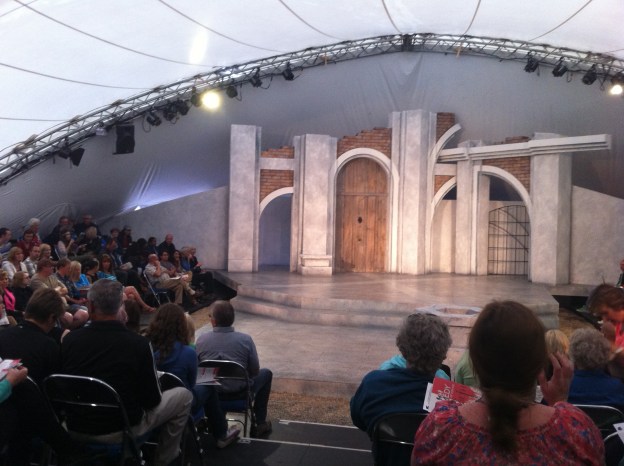
Rocket Sugar Factory is the company of Jim Libby and Jacob Banigan, North Americans who currently perform in Austria.  I loved their show at last year’s Fringe so I made a point of fitting them in this year, and they didn’t disappoint me.  They started by getting suggestions from different sections of the audience – starting with audience suggestions is one of the improv traditions.  The performers built affectionate rapport while collecting suggestions in the intimate setting of the Walterdale Theatre, and because their separate conversations were simultaneous the result ended up more of a surprise.  In the show I saw, they concocted a horror tale (which was more of a classic ghost story) set in 19th century England.  Both performers made effective use of accents and body language to distinguish among their characters and delight the audience.  They switched roles frequently, occasionally confusing me but mostly following each other’s lead to build a funny creepy story.  Jim Libby’s occasional corpsing (falling out of character momentarily to laugh at what was going on) did not detract from the audience’s amusement and illustrated that they were having fun.  Rocket Sugar Factory has one more show, tonight at 6:30 pm.

Scratch is the show of Arlen Konopaki and Kevin Gillese, both of them Rapid Fire Theatre alumni who are currently working (separately) in the USA.  It’s playing at the Princess Theatre, to packed houses of fans.  The theatre isn’t an ideal venue, because it’s long and narrow, making it hard for the performers to hear audience suggestions.  Both of them wear cordless mics during the show, and they were easy to hear thanks to tech Cadence Konopaki.  Their style is very physical, and I could see that the mics were inconveniencing them, though.  In the show I saw, very physical included climbing Mount Everest, flying around as Game of Thrones dragons, playing piano, lumbering around as a yeti, and a lot of admirably athletic simulated sex.  Like the performers of Rocket Sugar Factory, it’s clear that Arlen and Kevin have been playing together for a long time, the way that they pick up each other’s cues, switching roles seamlessly and spinning around to signal a transition into another scene or set of characters.  In Scratch, most of the show had scenes alternating among three separate stories, with some fitting together at the end.  Scratch plays tonight at 10 and tomorrow at 3. 

Off Book is a completely improvised musical-theatre performance.  It’s a Rapid Fire production at the Yardbird Suite, which seems to be a great venue for performers although it is probably visually a bit unsatisfying for people sitting at the back since there aren’t any risers.  The acoustics are good though.

Rapid Fire Theatre hosts Off-Book performances sometimes as part of their regular season long-form improv offerings on Saturday nights, so if you enjoy this show you can watch the Rapid Fire website and Facebook group to see when you can see more.  The troupe is led by Matt Alden, and accompaniment is provided by the talented Joel Crichton on keyboard.  Other performers in the show I saw were Amy Shostak, Joleen Ballendine, Kory Mathewson, David Walker, Vince Fortier, and I think Jocelyn Ahlf.  Starting from the audience suggestion of a graveyard as location, they generated all the tropes of musical theatre from a catchy ensemble opening number “It’s a great day to be dead!” to a romantic plot with supporting sidekicks, impeccable rhymes, occasional dance numbers, harmonising two musical themes, a deathbed solo, and a tidy ending recalling the melodies explored earlier.  I thought that the performance I saw was particularly strong, and I thought that the venue was more conducive to appreciating the nuances of the lyrics than Rapid Fire’s usual space in Zeidler Hall at the Citadel.  Off Book plays today at 2:30, but is probably sold out.

Saturday recommendation: Dykeopolis at 12:15

Kimberly Dark’s solo show Dykeopolis made me happy and made me laugh, but it also made me think.

She is a relaxed and powerful speaker, connecting effectively with the audience and owning the stage with just a chair and a hardbound journal.   Her richly intimate stories provided provocative and compelling examples of the ways that gender and sexuality interconnect and that homophobia arises out of misogyny.  And her presentation was skilfully designed to reach people with a wide range of experience and comfort level with the subject matter, for example clarifying her definition of the word “queer”.  But as soon as the audience felt comfortable, she jolted them out of that ease and then laughed, “You thought I was going to be a nice lesbian, didn’t you?”  The narrative flows smoothly from story to concept to the next story, from the tangible intensity of a first teenage attraction to finding a balance between protecting a partner’s safety and protecting her pride in an encounter with a macho Mexican cop.

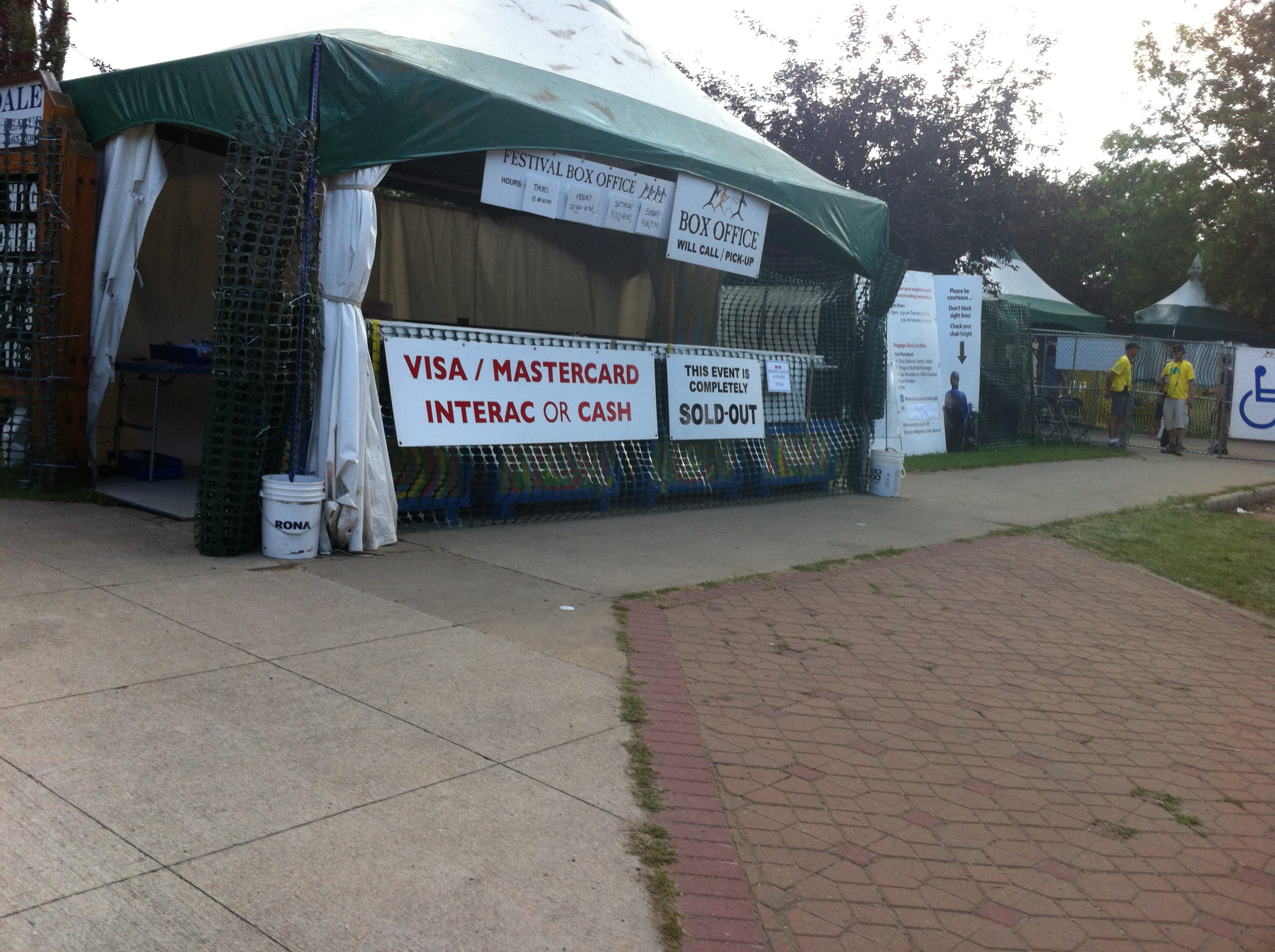
The blog I Dig Your Girlfriend has an interesting interview with Kimberly Dark and a strong recommendation to see the show.  I second the recommendation – but since I’m just getting around to posting this now, there’s only one show left.  Today, Saturday, 12:15 pm, at Acacia Hall on 83rd Avenue (stage 10).  There’s a box office right outside the theatre, which takes cash, plastic, and Fringe bucks, and also lets you pick up tickets you’ve ordered on line.

Rent, Borderland, and other stories: Fringe 2013

On Sunday I arranged to take a night off from working backstage at God on God, because that was the only way I could see RentGod on God’s VUE review has three stars, by the way, and is running every night at 8 pm and Friday and Saturday at 10pm too.

Of course, I fitted in a few more shows as well.

Borderland – Izad Etamadi’s one-person show about a gay man leaving Iran, one of the eleven countries where homosexuality or sodomy is a crime legally punishable by death.   The performer plays three characters – Navid the would-be refugee, Zia who helps him escape, and Leila, a woman who takes care of him after he moves to Turkey and gives us glimpses of her own story as an “ugly woman” in a patriarchal culture.  His portrayal of Leila, and his transformation to the female character by turning his back and flirting his hips while donning a headscarf, were amusing without quite crossing into ridicule.  I wanted to hear more of that character’s story.  The performer also sang unaccompanied, both in Persian (I think) and in English.  The English material was original and in the musical-theatre idiom, and it reminded me somehow of local musician Joel Crichton.

Nashville Hurricane – I missed seeing Chase Padgett’s 6 Guitars at last year’s Fringe, so I was curious about his 2013 show.  This year’s solo performance reminded me of a short story, the kind of short story that’s an affectionate sad portrayal of characters in the rural South and in the music business.  He spoke as four characters, each with his or her own mannerisms and accent.  The eponymous character was a young musician who was probably autistic, and the others were various adults in his life.  The show I attended was sold out, and I didn’t look at my watch once.  Chase Padgett was so good that for a little while I felt like my own storytelling aspirations were futile.

Capital City Burlesque’s Elvis Odyssey – This show had solo pieces and group numbers, loosely tied together with the themes of Elvis Presley music and a global survey of cultures.  Along with nine or ten burlesque dancers, all talented, attractive, and seeming to enjoy themselves, other features of the show included Tim Mikula (of Rapid Fire Theatre and Doctor Jokes) as master of ceremonies, an impressive troupe of belly dancers called Les Trois Femmes, and costumed support staff – the Panty Zamboni and the Merch Girl.  I hadn’t seen this troupe before and I definitely want to watch for their shows in future.  An interesting note is that their Sunday-afternoon Fringe shows are “covered”, meaning that the dramatic finish of an act usually involves sparkly pasties on top of a bra.  This is a bit odd, but probably a nice touch to expose them (ahem) to a wider audience.    The show started a little late and ran a bit later than scheduled, which was frustrating to me at a satellite venue during Fringe when I had another show elsewhere to get to shortly afterwards.

Excuse Me … This is the Truth – This well-done story gently poked fun at the culture of contemporary enthusiastic Christianity, as backdrop to the sweet tale of a boy (Jessie McPhee) caught between his bossy longtime girlfriend (Joleen Ballandine) and a new friend (Lianna Makuch) who appreciates his interests and makes him notice that his girlfriend has been making all his decisions for him.   Also, they throw candy into the audience.  Really good candy.

Rent:  the Musical –Strathcona Alumni Theatre, the Linette Smith company that did Spring Awakening last year, is doing a production of the recent Broadway musical Rent, about a group of struggling artists in New York City’s Lower East Side.  Many of the characters are HIV positive.  As the story starts Christmas Eve they’re all unhappy for various reasons, including the threatened eviction alluded to in the title.

There’s a cast of 14 and four musicians, squeezed onto the small stage along with a couple of scaffolding fire-escapes.  But they use the space well (and look more comfortable than the audience squeezed onto risers).  I haven’t seen other productions of the live show, just the movie, but in this production I was immediately captivated by the story of Collins (Hunter Cardinal) and Angel (Jordan Mah), rather than focusing on Mark and Roger (Cameron  Kneteman and Maxwell Theodore Lebeuf) and their parts of the story.  Hunter Cardinal stood out for me because he projected his character’s emotions so powerfully.  The scene in which Angel dies in thrashing agony as Collins tries to comfort him and himself was particularly effective.  Cynthia Hicks was also delightful to watch, portraying Mimi with a mix of allure and loneliness.  Maureen (Emmy Kate Devine)’s defiance and performance-art show, Joanne’s and Benny’s (Morgan Melnyk and Christopher Scott) uptown discomfort with the bohemian crowd, and the minor characters’ contributions to the plot and strong musical support (especially from Gabriel Richardson and Lauren Derman).  It’s a long show (two hours ten minutes plus a short intermission), but it is well-paced and everything moved smoothly.  (As a brand-new stage manager, this impresses me more than it used to.)  The musical accompaniment was well balanced, allowing all lyrics to be heard in the small space but still sufficiently powerful when needed.

I believe that it’s sold out for the remainder of its run.  This is no surprise, with the cast list full of names to watch in musical theatre, and a production worthy of them.   Sometimes for BYOV shows there are a few tickets at the door, though.

The first seven shows I saw at Edmonton Fringe

Ask Aggie: The Advice Diva – Last year at Fringe I enjoyed Christine Lesiak’s clown alter ego Sheshells and her partner Rocket in Fools for Love.  This year Christine Lesiak has a one-person show with audience participation, and it’s also delightful.  When the audience comes in, you get a card on which to write a question about love, sex, or relationships, and you put them in a little box on stage.  Aggie is fabulous, flirtatious, flexible (as suiting a physical-comedy expert, she draws each question from the box in a different way, including with her toes) and five times widowed.  She alternates reading and answering the audience’s questions with scripted material responding to frequently-asked questions with stories about her experiences with her various husbands, the best of which is the musical number “Vibrators are a Girl’s Best Friend”.

They Call Me Mister Fry – This was a storytelling show by Jack Freiburger of Los Angeles, talking about his first year as a teacher.  The story had some familiar elements – middle-class career change into teaching, dreamed of teaching at a fancy surburban or private school, didn’t get the job, landed underprepared in inner-city school, got in trouble with rigid rules or bureaucracy (in this case, No Child Left Behind oversight), made a difference for some kids, and decided to stay.  The performer did a good job of portraying Grade 5 students with shifts in posture.

Waiting for Bardot – Trevor Schmidt plays an aging Brigitte Bardot pursued by a journalist (James Hamilton) who gets more than he bargained for.

Rocket Sugar Factory – Jim Libby’s and Jacob Banigan’s long-form improv show.  I saw this troupe at last year’s Fringe, before I had gotten involved in doing improv myself, so I didn’t appreciate then just how good they were at creating characters and a plausible narrative.  Jim Libby seems to create more of the ideas and Jacob Banigan follows them.  I would definitely watch these guys again.

RiderGirl – Colleen Sutton’s one-person story about becoming drawn in to the world of Saskatchewan Roughrider football fandom known as Rider Nation, and how her shared enthusiasm and commitment to the team connects with other events in her life.  I expected it to be a funny affectionate portrayal of the phenomena I encountered this summer in Saskatchewan, and it was.  I did not expect it to make me cry, which it did.

Happy Accidents in Something Simple – this was a collection of short pieces by local clown performers.  My favourite was the musical ensemble directed by Scooby (Mary-Lee Bird), which included a propane tank turned into a well-tuned steel drum as well as a trombone and percussion on various found objects.

Life After Breath – another clown show, this time one long narrative about two characters, Nona and Squee, coping after the death of a third.   Neelam Chattoo’s Squee, the younger or more dependent character, was particularly endearing.

Edmonton Fringe

When I was little, I loved parades.  Our town had two parades a year, one in June  (Flag Day Parade) and one in December (Santa Claus Parade), as well as a parade of Scouts and Guides without any floats or give-aways.  One year there was construction on the main road and the parade came right in front of our house!  I loved everything about the parades, from the candy-cane giveaways to the bagpipe bands and uniformed dance troupes and the quarter-size milk delivery truck with a moo for a horn.  Our family always arrived early at our watching spot on the sidewalk outside the Stoney Creek Dairy ice-cream bar and convenience store, right after the parade turned the corner.

The summer I was nine, I joined my first organized sport, a softball team.  There were lots of exciting things about being on a team – wearing a uniform, getting to cheer and shake hands afterwards even when we lost, getting to ride in the back of a pickup truck to the away games in the country.  And partway through June, our coach told us about another exciting opportunity.  We were going to wear our uniforms and march in the parade with all the other softball teams.  I was going to be in a parade. And the real parade, not just the one my Brownie pack marched in.

But after I ran home to tell my parents the thrilling news, I realised that if I was going to be in the parade, I wasn’t going to be able to watch the parade.  No craning my neck watching for the next entry and trying to remember which floats or bands or baton-twirlers we hadn’t seen yet. No more competing with other kids for thrown candy and other freebies.  No more deciding which band was my favourite and looking hard to see if any of them had women in them.  I was going to miss out on all of that.

Mum and Dad said it was up to me, that I could skip marching if I wanted to, it wasn’t a requirement like going to softball practice.  I discussed it with my coach, who didn’t really care and couldn’t see why I was torn up by the decision.  But it felt like a huge symbolic choice, losing the magic and giving up my childhood forever, in order to be on the other side, and I wasn’t sure I was ready.  Finally I decided on a compromise.  I would join my team at the marshalling point in the high school field and march the first half of the parade, then drop out when I saw my family and watch the rest of it.  It wasn’t a perfect solution, but it was the best I could do, when I wasn’t able to let go of either experience.

I feel the same way right now about the Fringe Theatre festival.  I’ve been an enthusiastic audience member at Edmonton Fringe for five previous festivals, from tentatively going to a few plays and the beer tent by myself the first week I lived in Edmonton, to seeing 35 performances last summer when I wasn’t working.  And after last year’s Fringe I decided to keep some of that energy in my life by going to lots of local theatre year-round, which led to taking improv classes, volunteering at Rapid Fire Theatre shows, and starting this blog.

So the logical next step was to volunteer at the Fringe this year, or to get involved with putting on a show, or something like that – to become part of the Fringe instead of just a playgoer and donor.  I signed up to work in the beer tent, and when I heard that some improv class friends were producing a show they’d written, I asked if they needed help and they needed a stage manager.

But when the festival programs came out, I started circling shows I wanted to see, and looking at what I could fit in along with my various commitments and a day job, and suddenly it was like the parade all over again. I want to be part of it, but I also want to be running from venue to venue with a fistful of tickets in my hand talking to other playgoers about what else I should see, just like I did last year.  I want to help make the magic without losing the chance to experience it from the audience.  I’m not nine years old any more, but I’m making the same choice now that I did then – the choice to do a little bit of everything.  I’m not getting enough sleep, and I’m paying to park rather than taking my bicycle and using transit, but it’s been wonderful so far.  It turns out that the Fringe is just as magical on the inside as it is from the audience.   The volunteer experience is well-organized and inclusive.  And helping to produce a show that makes people laugh is more rewarding than I thought it would be.

The 32nd Annual Edmonton International Fringe Theatre Festival runs until next Sunday August 25th, mostly in Old Strathcona but also at La Cité Francophone, downtown, and on Alberta Avenue.  Tickets are available on site and on line.  Notes and recommendations will follow soon.

Shows I forgot to tell you about!

Last spring I missed writing up several theatre excursions.  The programs were piling up on my table making me feel guilty, but the backlog didn’t stop me from going to more shows.

Since I’m going to count the Edmonton Fringe as the start of a new year of stage entertainment, I’m going to get caught up here, with a brief list of all the shows I didn’t tell you about earlier, and then I can start over.

  • The Penelopiad – Citadel Theatre – This show was done with an all-female cast.  I was particularly impressed by the performer who was playing Odysseus as well as her other roles, because her body language and voice transformed her instantly into a convincingly arrogant man.
  • Spamalot – Citadel Theatre – this musical was just fun, as a mix of the Monty Python source material and a send-up of Broadway-musical tropes.
  • Escape from Happiness – Citadel Theatre Young Acting Company – I remember being fascinated by how much darker this kind of story is nowadays than a generation ago.
  • Winter’s Tale Project – Citadel Theatre Young Musical Company
  • Strike! A Musical – This was a full production with a large company, including nine junior-high-age performers.  Apparently it’s going to be a movie soon.  A few of the songs are still occasionally stuck in my head a few months later.
  • An Accident – this Northern Light Theatre show with Michael Peng and Melissa Thingelstad, directed by Trevor Schmidt, was provocative and interesting.  Something about it didn’t quite work for me, but I didn’t figure out why.
  • The Last Days of Judas Iscariot – this was a U of A Department of Drama show.  I enjoyed it.  It was a great mix of original and canon-consistent.

According to my datebook, starting with Fringe 2012 I saw

  • One orchestra performance
  • One band concert
  • One rock-band show (I used to see a lot of live rock music, but this year I’ve been focusing on theatre and I only have so much time and money, unfortunately)
  • One opera
  • Lots of music at Edmonton Folkfest 2013
  • One night of circus acrobatics
  • One open-mic night and one variety show at camp
  • At least five first-run movies, mostly with superheroes
  • Two story slams (but I was in one of them)
  • 35 Fringe shows counting holdovers and one show that I saw twice
  • 24 nights of improv with Rapid Fire Theatre, most of them as a volunteer and many of them with two shows in the evening
  • 40 non-Fringe theatrical performances, in Edmonton, Red Deer, Toronto, and Vancouver.

So I guess missing out on reviewing seven plays is not so bad.  I’d hoped to do a Sterling-awards post with my picks and the winners, but it’s almost time for the Fringe to start and I’m in an excited mood rather than a retrospective one.  The best play I saw all year was Collin Doyle’s Let the Light of Day Through.  The show I went to the biggest expense and effort to see was Book of Mormon in Toronto, and it was worth it.  It was all worth it.  And I can’t wait to see what’s coming in the next year of live entertainment in Edmonton and elsewhere!

Edmonton Folkfest 2013

I’m a relative newcomer to Edmonton Folkfest, having only been to four of them (I first moved to Edmonton on the Monday morning after Folkfest 2008.)

Every year the folkfest people tinker with some aspects of the festival to make the well-run thoughtful weekend even better for more people.  Some of those little changes are easy to be grateful for right away – for example, the closing of Stage 4 in order to give good sound quality on Stages 3 and 5, and leaving the Stage 4 area as a place to enjoy shade and relative quiet in a loud busy weekend, and moving the lower tarp lottery to behind the Muttart Conservatory where there is also grass, shade, and a little space to spread out and make a bit of noise early in the morning.

But sometimes the little changes are harder to get used to.  This year, I was disappointed in the new location for the bike lockup.

I love the Folkfest arrangements for a lighted supervised bike parking area with claim checks.  Since I worked out a cycling route to get from my home in Ritchie to the Folkfest site without challenging hills or busy streets, I’ve almost always gone to Folkfest by bike.  It has always seemed easier to me than learning where to park nearby and carrying my chair and other gear to and from the parking, or travelling by bus also with a significant amount of walking-uphill-with-chair.    But with the bike lockup at the Bennett Centre, just outside the main entrance, it was never quite big enough and getting out of there in the dark through the congestion of the taxi stand was always challenging.  So this year the bike lockup was set up on top of a hill behind the Muttart Conservatory – near the top of the Stage 6 viewing area, but of course there are some fences in between.  It’s a great setup.  Except that with my limited energy, I have to walk the bike up the final hill and rest before unpacking my gear, and then I have to walk most of a kilometer to the gate (1.2 km total from the bike corral to Stage 6) carrying my stuff, and at the end of the night there’s an uphill walk again.  And I can’t do it.  Not and have fun all day and have energy to dance.   I still love the idea of biking to Folkfest, but on Saturday and Sunday I took taxis.

Once I got in the gate, everything was great.  Interesting tasty food, good friends, musicians both familiar to me and unfamiliar, and good weather as long as I stayed.  (I didn’t stay long enough on Sunday night to encounter the thunderstorm.)   My favourite new musical discoveries of the weekend were Good for Grapes, from Surrey BC, and The Head and The Heart, from Seattle.  I also loved dancing to Delhi2Dublin (whom I’ve heard at previous Edmonton Folkfests and at Blue Skies in rural Ontario) and I loved being swept into memories by Bruce Cockburn’s voice in his mainstage show.

Photos: Sean MacKeighan of Good for Grapes, dancer and singer of Niyaz, box office with their job done.

good for grapes 6 dervish 2 box office done

More photos:  Makana, Langhorne Slim

makana langhorne slim 3

Shakespeare on the Saskatchewan

Did you miss me?  I spent July working in Saskatoon, as staff on an amazing enrichment program called Shad Valley.  It was fulfilling but exhausting.  I didn’t have time to attend or review theatre, and mostly their theatre calendar seemed to be in the same kind of pre-Fringe lull as in Edmonton anyway.  I’m back now, though, and you’ll be hearing more from me about Edmonton entertainment soon, with my August calendar filling up with Folkfest, Sonic Boom, and the Fringe.

I did get to attend two Shakespeare performances at Shakespeare on the Saskatchewan, a tent venue on the bank of the South Saskatchewan River.  The company does two plays in repertory with mostly the same actors, and this year’s offerings were Macbeth and The Comedy of Errors.  We attended Comedy of Errors with our program participants, and I returned with a few friends later to see the Scottish play.

I was not previously familiar with Comedy of Errors, so I bought a No Fear Shakespeare version of the text (original lines on one page, modern-language version on the facing page) the day before and read fast.  Basically, it’s a mistaken-identities-of-twins farce.  I was afraid that it would be confusing to follow, but I was almost always more clear about who was who than the characters in the play were.  I’m still not quite sure how the sets of identical twins ended up with the same names – there was an explanation about the parents being separated in a shipwreck and each rescuing one son and one slave-boy, but I couldn’t tell whether they had originally given the boys non-unique names or whether they’d just gotten muddled about which ones each parent had rescued.  But it definitely accelerated the complications and comedy that there were two look-alike slaves named Dromio (Bob Wicks and Ed Mendez) and two look-alike merchants named Antipholus (Jaron Francis and Mike Prebble).  There was lots of physical humour, especially by the Dromios, by Adriana (Jenna-Lee Hyde) who is married to the local merchant, and by a servant woman named Luce (Tara Schoonbaert).  I was a little distracted by the premise of buying infants as slaves and by the way that everyone took for granted that masters would hit their slaves, and I had to remind myself that this was not just a very different setting, but one that Shakespeare had made up.

The performance was quite short (under 2 hours with intermission I think).  I didn’t find the language a barrier to following the story and laughing at the funny parts.  The light-coloured tent venue and an evening performance in the long northern evening created an unusual lighting effect that contributed to the sense that this was a magical not-quite-real place.

One of the policies of the Shakespeare on the Saskatchewan festival is to employ actors from Saskatchewan.  So of course when I went to Comedy of Errors, none of the faces were familiar.  A colleague who is more familiar with the Saskatoon theatre scene said that he recognised several of them and had seen their work or knew them, and that made me realise how much fun it’s been becoming familiar with Edmonton performers over the last year or so.

On the other hand, seeing all the same actors in very different roles a few days later was a delight.  There were a lot of beards in both shows, and I struggled a bit in distinguishing Macduff (Ed Mendez) and Banquo (Bob Wicks) (who were wearing similar beige Highland dress and who had been the Dromios in the other show.)

I studied Macbeth in Grade 12, and I’ve seen two Stratford (Ontario) Festival productions.  But I was still surprised by how quickly the story progressed, with the ambitious couple acting quickly and then with everything going bad even faster.  I also noticed how the shock and horror gradually escalate, from Duncan’s murder being completely off stage to the on-stage slaughter of Lady Macduff and her child or children.

Lady Macbeth (Cassidy Thomson) struck me as very young, compared to how I’d seen her in the past.  Her sexuality and her ways of using her power over her husband and others to further her ambition seemed different somehow because of her age.  One of my companions found Macbeth’s (Matt Burgess) leaps from modesty to ambition to regret early in the play to be less than convincing, and I saw his point.

I remembered the play as being relatively short, but it was still much longer than Comedy of Errors.  The simple set (almost identical to Comedy of Errors) and limited lighting changes and music didn’t impede the director and actors’ ability to create the necessary mood shifts, from the overt spookiness of the witches’ appearance to the more disturbing appearance of Banquo’s ghost at a feast.  This production omitted the chatty funny byplay between Lady Macduff and the smartass son that immediately precedes their brutal murders, as there were no child actors, just a bundle of presumed infant.  It also simplified the Banquo’s ghost scene leaving out the parade of kings, and didn’t exhibit Macbeth’s head on a pike at the end.  But it included a bit that I didn’t remember at all, a discussion about how maybe Malcolm wasn’t suited to be king because he was too lustful.  Now I am wondering if that went completely over my head when I was younger or whether it was left out of our school editions.

Both productions continue into August.  Tickets are available through Ticketmaster as well as locally.  There is easy parking near the festival grounds as is common for everything in Saskatoon, and the festival grounds are a pleasant shady place to linger before the show or at intermission.

Salute to The Full Monty

It’s a “Let’s put on a show!” show.

It’s a group-of-unlikely-friends ensemble piece.

It’s a divorced-parent story.

It’s a familiar tale about what happens to the workers after the plant shuts down.

It’s about societal expectations for men, and about how men and women deal when the men can’t live up to them.

It’s a show about the problems of sexually objectifying ideal bodies, but it provides generous opportunities for the audience to appreciate the physicality of the performers on stage, particularly if their inclinations include appreciating men.

It is, of course, The Full Monty. The musical version, created by Terence McNally and David Yazbek for Broadway, and produced in Edmonton by Two ONE-WAY Tickets to Broadway, directed by Adam Mazerolle-Kuss.

Six unemployed male steelworkers, each with his own insecurities, decide to make money by performing a stripdance show. Through several challenges (trouble recruiting, trouble learning to dance, trouble coming up with the deposit for the venue, being arrested for indecent exposure or something) and personal troubles (pressure to get a conventional job, child-support dispute, repossession of property, bereavement), they come to support each other and appreciate each other, and the happy ending is the successful performance. The story follows the movie version fairly closely, and adds singing, dancing, and two delightful new characters, Jeanette (Francie Goodwin-Davies), a retired show-biz piano player, and Keno (Adam Sanders), one of the Chippendales dancers mentioned off-stage in the movie.

The singing and stage presence of Brian Christensen (Jerry) and Ariana Whitlow (Georgie) were particularly impressive. The choreography was fun to watch and all the main characters were good dancers who seemed to be enjoying themselves. Carter Hockley, playing Jerry’s young son Nathan, was noticeably more impressive in the third performance than in the first. (Yes, I have seen this show twice, it’s a reviewer thing, hmph.) Like the other performers in the show, it’s worth keeping an eye out for Carter Hockley in future years. His flirtatious routine handing out flyers was especially fun. Dave, the soft-hearted character (“You cry at Wheel of Fortune,” Jerry points out) who thinks he is too fat to be attractive, was played with touchingly humorous understatement by Jordan Ward. David Johnson (Malcolm) manages the Sandra-Bulloch feat of starting out with such uncomfortably-awkward postures, ill-fitting clothes, and avoidance of eye contact that one does not notice until partway through the show that the performer is actually attractive. The other three dance-troupe members, Harold (James Toupin), Horse (Orville Charles Cameron), and Ethan (Greg Caswell), are all played by actors with lots of experience, and their comic delivery is as good as their dance timing.

I was pleased at the way the script dealt with homosexuality. Although some of the steelworkers display casually-homophobic attitudes in the abstract ( “those Chippendale dancers must all be fairies, because real men wouldn’t go to the trouble of looking like that”) and make various pro-forma jokes, the new romance between two members of the ensemble is completely a non-issue: “Good for them” says Jerry. Also, compared to the movie, there’s a little more set-up foreshadowing this development – in a first viewing of the movie it might seem to come completely out of the blue.

My one complaint – and I don’t know if it’s just about this production or about the musical in general – is that I found it a bit too long, with some of the talking-only scenes too long for what is needed to develop characters and mood or advance the plot. Georgie and Pam (Joy Quilala)’s conversation in the men’s bathroom, the vignette about neighbours moving out, even the conversation to recruit Harold while the ballroom dancing is going on – I thought all of them could have been shorter. (Well, I didn’t actually mind the recruiting-Harold thing, because I mostly just watched the ballroom dancers.)

The music was good. There was a nine-piece orchestra with a conductor who was not also playing the piano, and the sound was very well balanced. The songs that stick in my head include “It’s a Woman’s World” and the finale “Let it Go”. The opening song “Scrap” had an odd melody reminiscent of a Joe Jackson song (I can’t remember which one), but was not as good a showcase of the singers’ talents as “Man” (Brian Christensen and Jordan Ward) or “You Walk With Me” (David Johnston and Greg Caswell).

The sets changed among many locations (mostly only used once each), with complicated bits like a whole public bathroom, a car, and a fussily-decorated living room. But the rotating bits moved smoothly and everything looked sturdy enough not to distract. Each of the performances I saw probably had one minor wardrobe malfunction, managed with poise by the performer affected.

The final dance number set during the strip show performance met my expectations, and illustrated the main theme of the show about how sincerity and self-confidence make anyone hot.

Two ONE-WAY Tickets to Broadway’s production of The Full Monty is playing at Unithéâtre/La Cité Francophone until June 30th, except for Mondays. Tickets are, as usual, available at Tix on the Square, or at the door.

Book of Mormon (the musical) was as good as I’d hoped.

When I lived in Kingston Ontario, one of my associates developed a theory that he called the Chez Piggy effect.  Chez Piggy was one of the best restaurants in town, (and by all accounts it still is!)  The food was creative and delicious, the service usually impeccable, and the atmosphere casual enough that people who didn’t go to “fancy restaurants” often would be able to feel comfortable.   But my associate had the theory that Chez Piggy didn’t completely deserve its fabulous reputation – he said that since so many of the people who went there were going to mark an occasion (anniversary, graduation, etc), they were unlikely to express any criticism of the actual food or service because they were inclined to make good memories and not “ruin the occasion” by voicing any displeasure to their server at the time or to each other afterwards.

I didn’t actually agree with him about Chez Piggy, since I had never had poor food or poor service there, but I saw his point in general.   When I go to a lot of trouble and expense to attend something, I probably am less inclined to pay attention to its flaws.

With all of that as a circuitous disclaimer, I want to say that my first impressions of the Toronto/Mirvish production of the musical Book of Mormon were entirely positive.  I saw it on Saturday – actually I saw two performances back-to-back and I loved it more the second time through.

Book of Mormon is a story about two Mormon missionaries arriving in Uganda, and how the interaction changes both the missionaries and the Ugandans.  It’s also about faith versus works (and comes down hard on the Pope Francis side that being a good person matters more than believing all the right things).  It’s about North American / Global North views of Africa as the homogeneous themepark of Lion King.  It’s about boys trying to please their fathers, and families trying to cope in horrible situations, and metaphors versus miracles.

I am quite familiar with the soundtrack, but knew almost nothing about how the story progressed between the songs and bits of conversation on the original-cast album, and nothing at all about what I would see on stage.   So I had a general sense of plot and pacing, but there were several key points which did not become clear until I was watching the actual show.  Unlike many musical productions, the program for this one did not list the songs.

Being familiar with the lyrics meant that I wasn’t always laughing at things the rest of the audience laughed at.  Some of them laughed at swearing just because it was swearing, every time.   There’s quite a bit of swearing in the show, and we hear it as shocking because the young missionaries are shocked by it.  The alternatives-to-swearing employed by the missionaries (“Oh-Em-Gosh”, for example) sounded credible to me and were generally not played for laughs.

I was completely delighted by the dancing.  The big production number to “Spooky Mormon Hell Dream” said some original things about Hell and was creepy and funny without being ridiculous.   A historical pageant included acting out the effects of dysentery on Joseph Smith and his fellow migrants, which was just barely not too graphic for my comfort and thus hilarious.  And I loved the elder-missionaries chorus showing their flashier sides in “Man Up” and “Turn It Off!”  I am a big fan of ironic choreography that uses all the familiar gestures of 20th century stage shows in parodic ways, and Book of Mormon had lots of them – jazz hands, top hats, tap dancing, exaggerated marching, pelvic thrusts, and other bits that I don’t have the words for but have been seeing since I was a small child watching song-and-dance shows on television.

In the Saturday shows, the role of Elder Cunningham (the bumbling fanboy missionary) was played by standby Michael Buchanan rather than the usual actor Christopher John O’Neill.   The other headliners Mark Evans (Elder Price, the cocky missionary with the rockstar reputation who chokes) and Samantha Marie Ware (Nabulungi, Ugandan convert and love-interest) were performing in their usual roles.   On first viewing, I didn’t really distinguish among the Ugandan people in the story except for Nabulungi and her father (I’m not sure if he was some kind of village authority; he was the person the missionaries had been told to report to.)  Seeing it again, I saw the doctor, the man called Motumbo (whose identifying motivation is disturbing enough that I won’t repeat it here out of context), and the teacher, as well as the warlord called the General and his supporters – but except for Nabulungi the villagers are not well characterised.  Neither are the other missionaries, except for Elder McKinley (Grey Henson).

I felt uncomfortable about a few of the ways that Nabulungi, the female lead, was diminished into comedy.  There’s a running gag about Elder Cunningham, for all his crush on her, being unable to remember her name and substituting all kinds of inappropriate long words –  Nala (like in Lion King), Neosporin, Jon Bon Jovi, Nanaimo Bar, and so on.  (I’m almost positive that he didn’t say Nanaimo Bar in the afternoon show just in the evening one, so the actor may have been riffing somewhat spontaneously in the late shows of the run).   She buys a typewriter which she calls a “texting device”, and then the plot advances through her writing notes to people which she refers to as texting.  This made me feel like it was making fun of a developing-world young woman’s wish to be modern and her misunderstanding of technology and terminology.   Near the end, there’s a miscommunication plot point about her having assumed that accepting baptism would lead to her getting to emigrate to Salt Lake City with the missionaries (Sal Tlay Ka Siti, as the title of her solo is spelled). I started to be annoyed at this being another shortcut joke making fun of the naïve village girl, but some of my discomfort was redeemed for me in the way all the other villagers immediately began explaining to her that they’d always known that the religious stories were all metaphors, and had accepted the religion knowing that.  This was also a tidy way of reconciling the canonical Mormon stories with Elder Cunningham’s creative and useful extemporaneous versions, saying that the details really don’t matter very much.

The sound balance was just about perfect, from where I was sitting.  There was a small live orchestra which never overpowered the singers.  The lighting was effective and usually unobtrusive.  The scenery was fun to look at but not overly complicated or distracting.  A few things were moved by the actors (turning a door as they walked around it to indicate changing from an outdoor to indoor scene) but mostly things moved invisibly.  For the scene when the new missionaries arrive in Uganda totally overwhelmed, the visuals bring this out very well, with lots of crowded buildings, and rocks making a busy cluttered setting while the villagers go about their daily chores all over the stage, including one character dragging a dead donkey behind him, its head bobbing bloodily.

The story and the characters worked very well for me, partly because over the course of the story everyone changes, some of them quite against their will but all in a way that I saw as positive.  I wondered ahead of time if I would find it difficult to accept the premise of the story without needing to ignore inconsistency with my own beliefs.  In fact I was pleasantly surprised that after a lot of pointed criticism of that specific implementation of religion and evangelism earlier in the play, the general resolution was approximately humanist in a way that I didn’t find troubling or dramatically inconsistent.

Book of Mormon closed in Toronto after last weekend, but the tour continues.   I would definitely see it again if an opportunity I could afford arose.   Or possibly one that I couldn’t, after I finish paying for this trip.