
In July I attended two great local theatre events that I meant to post about. But in both cases, I thought … oh, I still have one more performance to see later, I can wait until I see that one last thing. And then the event was over so my recommendations wouldn’t have any immediate value, and the summer rushed on with other adventures – a trip to Jasper just before the evacuations, rehearsals for a new Fringe musical – and I haven’t written about any of the performances. So here’s a quick overview.
Found Festival, the small festival of “art in unexpected places” again included an interesting collection of hard-to-classify experiences, in corners of the neighbourhood and city that I don’t always pay attention to.
Madness and other Ghost Stories was an eerie and yet affirming evening of spooky and spirit-infused stories involving mental illness, neurodiversity, and the unexplored territory of inside one’s head. Philip Hackborn curated and hosted, in ways that clearly supported their artists’ safety and comfort. I found Calla Wright’s poetic tale particularly effective.
The Nature of Us was an installation in Queen Elizabeth Park, with sounds playing from unseen speakers, while people used the park paths on foot, on bicycles, on scooters, etc. Kevin Jesuino, Cass Bessette, and Jean Louis Bleau were the credited artists.
Lucky Charm was a progress showing for the FreshAiR artist Louise Casemore’s ongoing project, an invitation to a small audience group to attend a seance led by Harry Houdini’s widow (Casemore) and hosted by her friend/promoter (Jake Tkaczyk). I’m looking forward to seeing the full version next year.
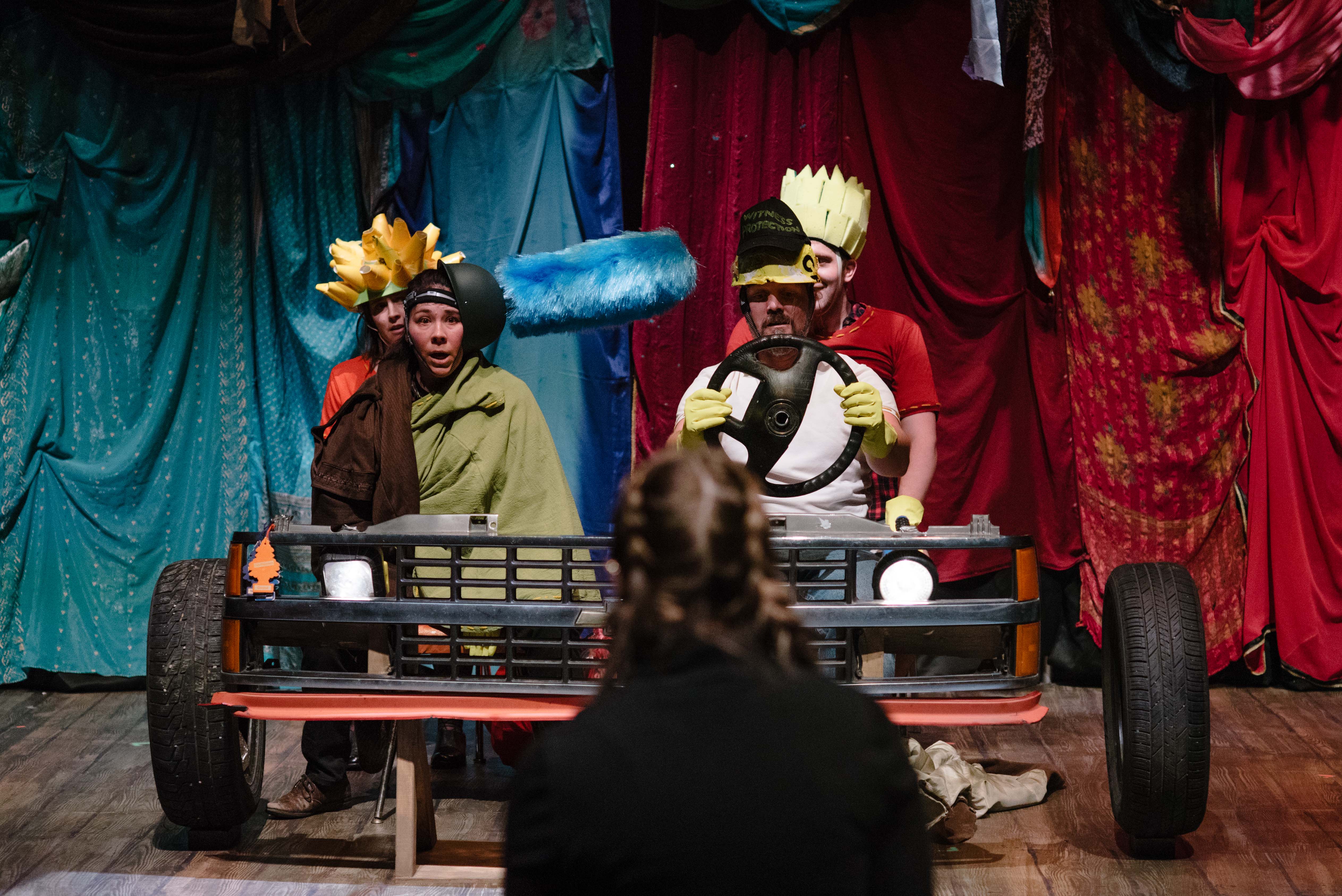
Brick Shithouse was as close as Found Festival gets to a “mainstage” theatre presentation. It was held in a perfect space for this story, a dingy warehouse with a few rows of audience seats along one long wall, and the rest of the space configured as a rough fighting gym with camera/recording setup. Ashleigh Hicks was the author, Sarah J Culkin directed, and the performers were a stellar lineup of Mohamed Ahmed, Geoffrey Simon Brown, Alexandra Dawkins, Sophie May Healey, Jasmine Hopfe, Moses Kouyaté, and Gabriel Richardson. I loved the high energy of the piece and the way in which it quickly set up the scenario of this group of friends streaming their bouts to make money. Sam Jeffery was credited with the fight direction and intimacy direction, both of which were essential to create the intense-feeling experience for audiences while keeping the performers safe. The performances easily convinced me of the premise that the characters of various genders and sizes could fight each other effectively. And like the characters in Liam Salmon’s Subscribe or Like (WWPT, 2023), it was easy to see how they didn’t/couldn’t anticipate some of the things that might go wrong. Alex Dawkins was particularly effective and heartbreaking as a character without much to lose. In the high-energy loud performance, there were several times where I couldn’t see/hear all of the conversations and I felt like I was missing important information. Was that intentional? Maybe, but I wanted to know more. I wanted to see it again, but it was such a hot ticket I was lucky to see it once.
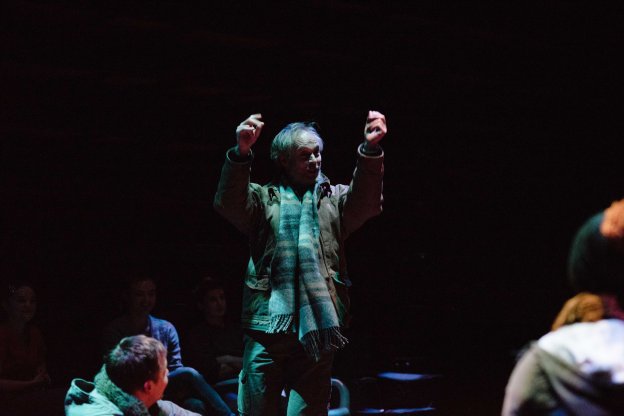
The other event I was looking forward to this July was Thou Art Here Theatre’s site-specific performance Civil Blood: A Treaty Story at the old fort at Fort Edmonton Park. Playwright Josh Languedoc, Thou Art Here principal Neil Kuefler, and others have been developing this concept since 2016 – telling the story of the Treaty 6 peoples through the lens of a Romeo&Juliet narrative. At Found Festival 2021, I heard a staged reading of a previous version at the River Lot 11 Indigenous Art Park off Queen Elizabeth Park Drive, and I was fascinated. This year’s production is told in and around the old fort. The company struggled with smoke and heat during rehearsal and ended up cancelling several performances. I count myself very lucky to have been able to see it twice, so I got to follow both “tracks” of the intertwining roving performance. I am always impressed when multiple-tracked roving shows are done with smooth timing and seamless stage management (Everyone We Know Will Be There: A House Party in One Act, Queen Lear is Dead), so I’m applauding stage managers Andrea Murphy and Isabelle Martinez. The audience was divided into two groups, one to follow the European characters and particularly the governor’s daughter Lily (Christina Nguyen), while the other followed the indigenous characters, especially hunter Ekah (Emily Berard). In each track, there was one character who acknowledged the presence of the audience, narrated to us, and directed us – Elena Porter as the governor’s wife Agatha Sampson, and Maria Buffalo as Takaw, an ancestor and possibly the chief’s grandmother. Eventually I realized that both these intercessors were no longer alive in the story’s timeline, so the choice made a lot of sense and also allowed smooth navigation, with the main characters never needing to cue the audience to follow.
Other performers in the 11-person company included Rebecca Bissonnette, Ivy Degagné (who was great as the young settler embracing the local culture and language – one glimpse of hope and how things could be), Doug Mertz, Cody Porter, Colby Stockdale, and Dylan Thomas-Bouchier.
The details of Civil Blood don’t match exactly with the details of Romeo and Juliet – they did match more in the 2021 version. The general concept of two houses alike in dignity, escalating tensions leading to tragedy and worse outcomes, and the passionate young person torn between the expected/appropriate romantic match and a more complicated attachment (Gabriel Richardson), were still there. I saw the two tracks more than a week apart, and I was intensely curious about the parts of the story that hadn’t been sufficiently explained on first viewing. When I attended the second time, I picked up a program and read the directors’ notes (Neil Kuefler and Mark Vetsch are credited as co-Directors this time), in which they encourage viewers to meet up at the community gathering/market after the performance and compare notes with people who saw the other track, since you can’t get the whole story from hearing one side. And – of course – what a brilliant illustration of how key this understanding is to working towards reconciliation, particularly in our Treaty relationships.
And now it’s August, and Fringe is starting in a few days. I’m stage managing the new satirical musical Regression, at the Playhouse performance space on 80th Avenue. And I’ll be volunteering in the beer tents, hosting visiting artists, and watching lots of performances. Watch this blog for notes on what I’ve seen!


 Ephemeral Pleasures